

Roadworks, construction projects, utility upgrades and public events are all part of a growing city. But whenever work takes place near an active road, there is another responsibility that cannot be overlooked: keeping traffic, pedestrians and workers moving safely around the site.
This is where traffic control companies Perth play an important role. Professional traffic control is not simply about putting signs and cones around a work area. It involves understanding the road environment, planning temporary traffic arrangements, managing changing conditions and making sure road users receive clear instructions.
For contractors and project managers, choosing the right traffic management provider can make a noticeable difference. Poorly planned traffic control can contribute to confusion, delays and unnecessary risks, while a well-managed setup can help a project operate smoothly without creating more disruption than necessary.
In Western Australia, the current Main Roads WA Traffic Management for Works on Roads Code of Practice, published in March 2026, sets requirements for traffic management at work sites on roads. The Code states that traffic management for works on roads must be based on the Austroads Guide to Temporary Traffic Management and AS 1742.3-2019 unless a WA-specific requirement takes precedence.
Understanding what a professional traffic management company provides can help businesses make a more informed decision before work begins.
What Do Traffic Control Companies Perth Do?
Traffic control companies Perth provide services designed to manage road users around temporary work areas and activities that affect normal traffic movements.
Their work can range from supplying trained traffic controllers to developing traffic management plans and implementing temporary traffic arrangements. Depending on the project, services may also include traffic guidance schemes, pedestrian management, lane closures, temporary signs, barriers, traffic control devices and ongoing site monitoring.
The exact service required depends on the project.
A small suburban maintenance job may need a relatively straightforward arrangement. A major infrastructure project on a busy arterial road may require much more detailed planning, staging and coordination.
Main Roads WA states that its Traffic Management for Works on Roads Code applies to work conducted within road reserves across Western Australia. This includes construction and maintenance work, public utility works and activities that interfere with the normal use of a road.
That makes traffic management an important part of project planning rather than something that should be considered after construction arrangements have already been finalised.
Why Professional Traffic Management Matters
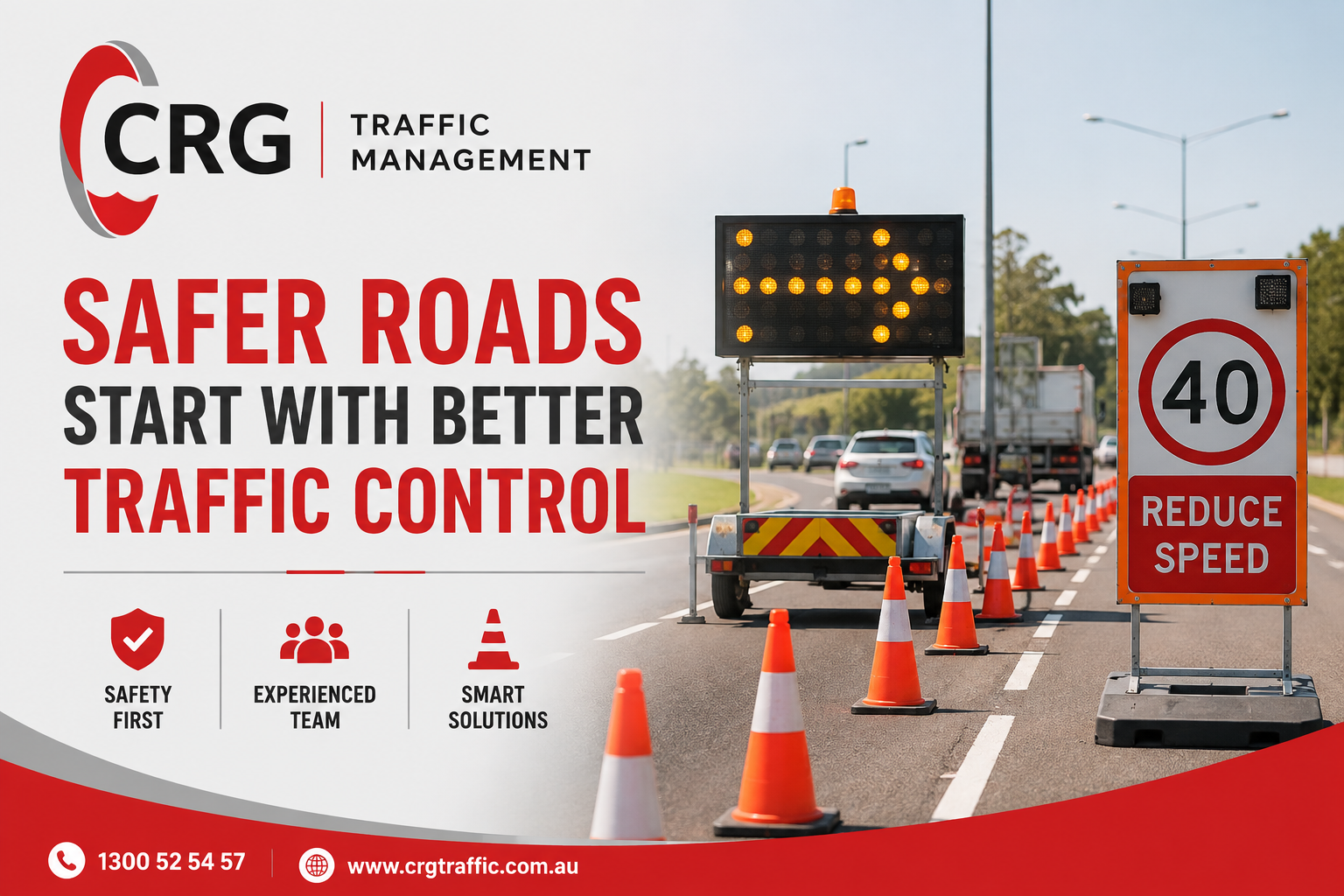
A roadwork site creates a temporary environment that is different from the road drivers normally use.
Lanes may be closed. Traffic may be moved into a different position. Pedestrians may need to use an alternative path. Construction vehicles may enter and leave the site. Workers may be operating only metres away from moving traffic.
Without clear organisation, these changes can become difficult for road users to understand.
Professional traffic management Perth WA helps create a temporary system that gives drivers and pedestrians clear information about what is happening ahead.
The objective is not always to keep traffic moving at normal speeds. Sometimes slowing traffic, closing a lane or introducing a temporary restriction is the safer option. The important thing is that these changes are properly planned and communicated.
Main Roads WA describes traffic management as a high-risk activity and states that incorrect traffic management can increase congestion as well as create risks for road users and road workers.
Understanding Traffic Management Perth WA
Traffic management Perth WA covers more than the visible work carried out by traffic controllers.
It includes the planning, design, implementation and monitoring of temporary arrangements around roadworks and other activities that affect road users.
A professional approach normally begins with understanding the project.
Site Assessment Comes First
Before deciding where signs, cones or traffic controllers should be positioned, the site needs to be understood.
A site assessment may consider:
Road width and lane configuration.
Existing traffic volumes.
Vehicle speeds.
Nearby intersections.
Pedestrian movements.
Cyclist movements.
Property and business access.
Public transport.
Work vehicle access.
Visibility and sight distances.
Existing signs and road markings.
Potential traffic queues.
These factors can significantly change the way a traffic management arrangement should operate.
A plan that works on one road may be completely unsuitable somewhere else. This is why experienced traffic management professionals assess the actual conditions instead of relying on assumptions.
Developing the Traffic Management Plan
Once the site and work activities are understood, the appropriate traffic management arrangements can be developed.
Main Roads WA provides a Traffic Management Plan template to guide practitioners in preparing TMPs. The current template was reviewed on 20 April 2026.
Depending on the project, a TMP can address:
Temporary lane arrangements.
Traffic control devices.
Traffic controller positions.
Speed management.
Pedestrian movements.
Worksite access.
Vehicle movements.
Traffic staging.
Temporary road closures.
Emergency access.
Property access.
Work hours and project stages.
For complex projects, the planning requirements can be considerably more involved.
Main Roads WA states that Traffic Management Plans involving complex traffic management arrangements must be reviewed and endorsed by an appropriately accredited Roadworks Traffic Manager.
The Importance of Experienced Traffic Controllers
Traffic controllers are often the most visible members of a traffic management team.
They may direct vehicles through restricted areas, coordinate movements, manage temporary traffic changes and help pedestrians navigate around affected areas.
However, the role involves much more than standing beside the road.
A traffic controller needs to remain alert to changing conditions, communicate clearly and understand the temporary traffic arrangement being implemented.
Training and accreditation are therefore important.
Main Roads WA states that anyone conducting works or events that may impact traffic or pedestrian access within the road reserve must hold a current traffic management certificate of accreditation.
There have also been recent changes to training requirements in WA. From 1 March 2026, portable traffic signal training became mandatory for people obtaining or renewing Main Roads Traffic Controller accreditation under the relevant training arrangements.
For businesses comparing traffic control companies Perth, understanding the qualifications and training of the people who will actually work on the site is therefore important.
Traffic Control Equipment and Temporary Road Arrangements
Traffic control equipment helps communicate temporary changes to road users.
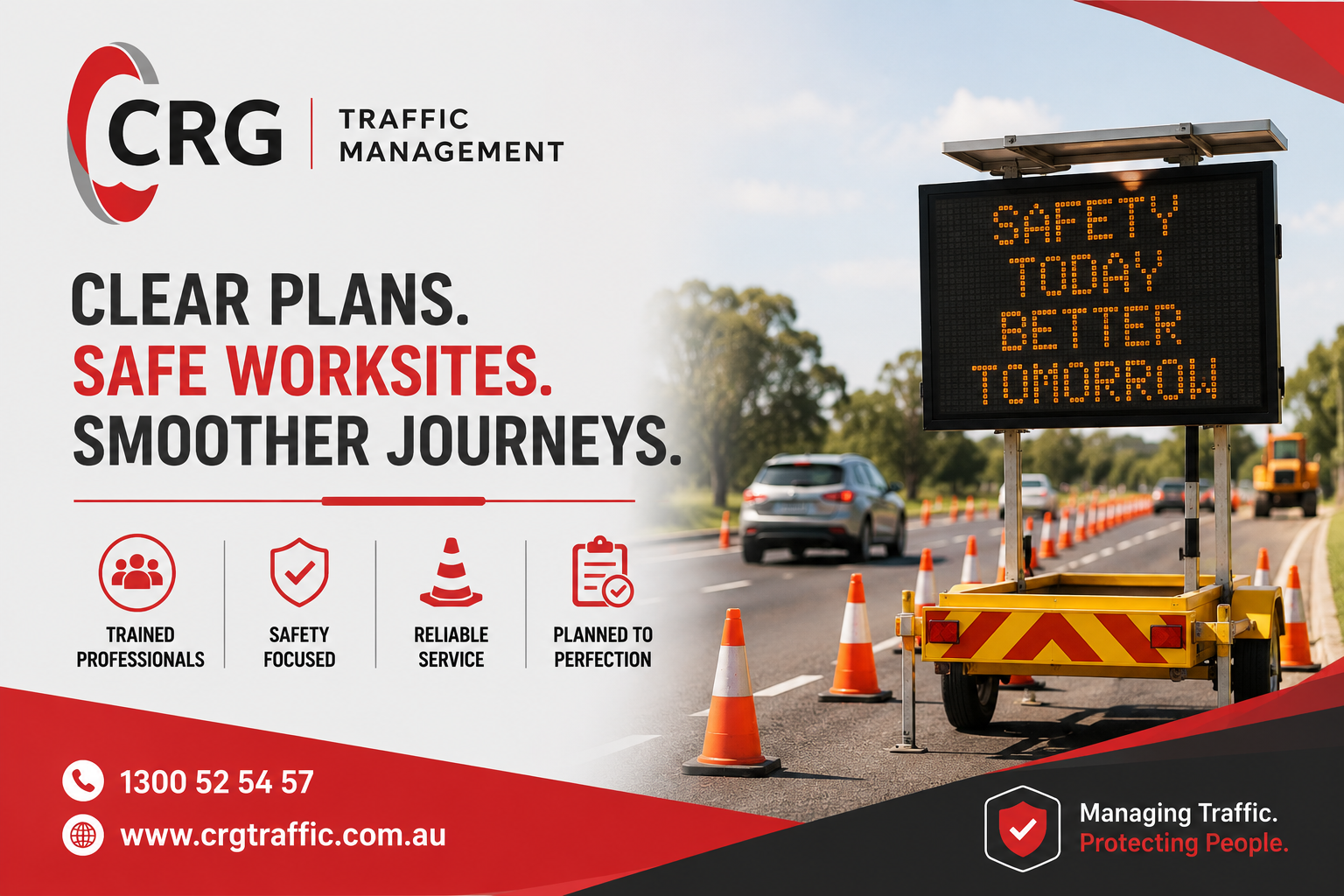
Depending on the project, this may include temporary warning signs, regulatory signs, cones, barriers, delineation devices and portable traffic signals.
But equipment alone does not create effective traffic control.
Placement matters.
A warning sign needs to be visible before a driver reaches the area where a decision is required. Cones and barriers need to clearly define the temporary traffic path. Pedestrian controls need to provide an understandable route.
This is why professional traffic management combines equipment with planning.
Main Roads WA currently lists approved innovative temporary traffic management products, including portable temporary traffic signal systems.
Technology can provide useful options, but it still needs to be correctly selected and integrated into the overall traffic arrangement.
Traffic Management for Construction Projects
Construction projects are one of the most common reasons businesses need professional traffic management.
Road construction, drainage works, utility installation, resurfacing and civil construction can all affect normal traffic movements.
The challenge is that construction projects rarely remain exactly the same from beginning to end.
One stage may involve work on a shoulder. The next may require a lane closure. Later, traffic may need to be shifted to a temporary alignment.
Each stage can create different traffic risks.
That is why traffic management should be considered alongside the construction schedule.
A professional provider can work with the project team to understand when traffic arrangements need to change and help coordinate the transition between stages.
Traffic Control for Busy Perth Roads
Busy roads can present additional challenges because there may be large numbers of vehicles moving through the area throughout the day.
A lane closure that causes only a small delay during a quiet period could create significant queues during peak traffic.
Intersections are particularly important.
If a queue extends into an intersection, it can affect traffic movements that are not directly connected with the worksite. The resulting congestion can spread into surrounding streets.
Good traffic management Perth WA therefore considers the wider network rather than focusing only on the immediate construction area.
Main Roads WA's traffic management requirements include consideration of road users and the surrounding road environment, with traffic management intended to support safe and coordinated road operations.
Traffic Management Around Events
Traffic management is not limited to construction.
Community events, sporting events, festivals, markets and other activities can also affect roads and pedestrian movements.
An event may require:
Temporary road closures.
Changed traffic movements.
Pedestrian crossings.
Temporary parking restrictions.
Traffic controllers.
Event signage.
Vehicle access arrangements.
Emergency access planning.
Main Roads WA provides dedicated resources for event traffic management, including an Event Traffic Management Plan template and examples of event TMPs.
The scale of an event will determine the level of traffic management required.
A small community activity may have a very different impact from a large event attracting thousands of visitors.
Australian Traffic Management Perth and Local Requirements
When discussing australian traffic management Perth, it is important to recognise that traffic management requirements are shaped by both national standards and specific Western Australian requirements.
Main Roads WA states that its Code requires traffic management for works on roads to be based on the Austroads Guide to Temporary Traffic Management and AS 1742.3-2019, with the WA Code taking precedence where there is a conflict.
This means businesses should not assume that a generic traffic management approach developed elsewhere in Australia will automatically meet Perth or WA requirements.
Local road authorities can also have responsibilities depending on the location.
Main Roads WA explains that approval for work on a road depends on the authority responsible for the care, control and management of that road. Works on local government reserves generally require contact with the relevant local government, while works on Main Roads-controlled roads follow Main Roads processes.
Local knowledge therefore matters.
Main Roads WA Traffic Management Company Registration
For businesses searching for traffic control companies Perth, company registration is another consideration for applicable State-road work.
Main Roads WA operates a Traffic Management Company Registration Scheme for companies implementing temporary traffic management on State roads. Main Roads states that registration is required where the traffic management requires a closure or speed restriction on State roads across Western Australia.
The scheme is designed to improve safety, quality and consistency in traffic management.
Main Roads explains that applicants need to demonstrate suitability against specified criteria and that company registration sits alongside the existing requirements for individual training and accreditation.
For project managers, this provides another useful point to consider when selecting a provider.
Rather than looking only at availability and price, it makes sense to check whether a company has the appropriate registration, personnel and capabilities for the specific project.
How to Choose Traffic Control Companies Perth
Choosing a traffic management company should start with the project rather than the quote.
Before making a decision, consider what your project actually requires.
Look at Relevant Experience
A company experienced with suburban roadworks may not necessarily have the same experience as one regularly working on major arterial roads.
Ask whether the provider has handled projects similar to yours.
Check Training and Accreditation
Traffic management involves trained personnel. Ask about the qualifications and accreditation of the people who will be involved in your project.
Understand Their Planning Process
A professional provider should be able to explain how they assess the site, develop traffic management arrangements and implement them.
Consider Communication
Traffic management can change as work progresses.
Choose a provider that communicates effectively with the construction or event team and can respond when site conditions change.
Review Their Equipment
Equipment should be suitable for the project and maintained appropriately. However, remember that having equipment is not the same as knowing how to use it effectively.
Consider Compliance
Make sure the proposed traffic management arrangements align with the requirements of the relevant road authority.
The Role of Traffic Management in Reducing Disruption
No traffic management system can guarantee that roadworks will cause no delays.
Roadworks change the normal road environment, so some disruption may be unavoidable.
The goal is to manage that disruption intelligently.
Good planning can help identify where congestion is most likely to occur and determine how traffic should be handled.
For example, work hours may be planned around traffic conditions where appropriate. Lane closures may be staged rather than implemented all at once. Pedestrian routes can be established before the original path is closed.
Small planning decisions can make a noticeable difference.
Main Roads WA describes its objective for external works and temporary traffic management as allowing works to occur safely, in a coordinated manner and with minimal disruption to road users.
Why Local Knowledge Matters in Perth
Perth is not one uniform traffic environment.
The traffic conditions in a residential suburb can be very different from those on a major arterial road. Industrial areas have their own heavy vehicle patterns, while commercial areas may have high pedestrian activity and frequent deliveries.
Local knowledge helps traffic management teams understand these differences.
However, experience should never replace a proper site assessment.
Every project is different.
The best approach combines local experience with current information about the particular site, project activities and expected traffic conditions.
Why CRG Traffic Management Can Be Part of Your Project Planning
For businesses looking for dependable traffic management support in Perth, CRG Traffic Management focuses on practical traffic management solutions designed around the needs of individual worksites.
The important thing is not simply to provide traffic controllers or equipment.
A successful traffic management operation should fit the project.
That means understanding the work, considering the surrounding road environment, communicating clearly with the project team and implementing an arrangement that supports both safety and traffic movement.
Whether the requirement involves construction, roadworks, temporary access arrangements or another activity affecting road users, choosing a provider with the right experience and capabilities can help the project run more smoothly.
Conclusion
Choosing between traffic control companies Perth should involve more than comparing prices.
Traffic management directly affects workers, motorists, pedestrians, businesses and the surrounding road network. A professional provider should understand the project, assess the site, develop appropriate arrangements, use trained personnel and work within the requirements of the relevant road authority.
The current Main Roads WA framework places strong emphasis on safety, quality and consistency. Its Traffic Management for Works on Roads Code sets the minimum requirements for traffic management on works across Western Australia, while the Traffic Management Company Registration Scheme applies to relevant temporary traffic management activities on State roads.
For businesses planning construction or roadwork projects, good traffic management Perth WA is an investment in a more organised worksite.
The right traffic management company does not simply control traffic.
It helps create an environment where workers can do their jobs, road users understand temporary changes and projects can progress with unnecessary disruption kept to a minimum.