

Traffic Control Perth WA: Keeping Roadworks Safe, Organised and Moving
Roadworks are a normal part of a growing city. Roads need to be repaired, utilities need to be installed, infrastructure needs to be upgraded, and new developments need reliable access. But there is one challenge that comes with almost every project: how do you keep workers safe while allowing traffic to continue moving?
This is where traffic control Perth WA becomes essential. Effective traffic control is not simply about placing cones on a road or having someone hold a stop-slow sign. It involves planning, communication, trained personnel, appropriate traffic control devices and a clear understanding of how motorists, pedestrians and workers will interact around an active worksite.
For a driver, good traffic control can seem almost invisible. You see the warning sign, reduce your speed, follow the temporary lane arrangement and continue your journey. Behind that simple experience is careful preparation designed to make the temporary road environment easier to understand and safer to navigate.
In Western Australia, traffic management for roadworks is guided by Main Roads WA requirements, the Austroads Guide to Temporary Traffic Management and relevant Australian Standards. The current Traffic Management for Works on Roads Code of Practice, published by Main Roads WA in March 2026, sets requirements for work conducted within road reserves throughout Western Australia.
For contractors, developers, utility companies and event organisers, understanding how perth traffic control works can make a major difference. Proper planning can reduce confusion, support worker safety and help minimise unnecessary disruption to the surrounding road network.
What Is Traffic Control Perth WA?
Traffic control Perth WA refers to the practical management of road users around temporary work areas, roadworks, construction activities, events and other situations where normal traffic movements are changed.
When a worksite occupies part of a road, affects a footpath or changes the normal movement of vehicles, traffic control may be needed to guide people safely through the affected area. Depending on the project, this can involve traffic controllers, temporary signs, cones, barriers, delineation devices, portable traffic signals and other approved traffic control equipment.
The exact arrangement is never supposed to be identical for every project. A quiet suburban street and a busy multilane road have very different traffic conditions. A worksite near a school has different pedestrian considerations from one located in an industrial area. Similarly, work beside a freeway requires a different level of planning from a small local road repair.
Main Roads WA states that its Code applies to work within road reserves across WA, including construction and maintenance activities and other work that interferes with normal road use. It also covers situations involving footpaths, shared paths and bicycle paths adjacent to roadways.
That is why professional traffic control begins with the site rather than with the equipment.
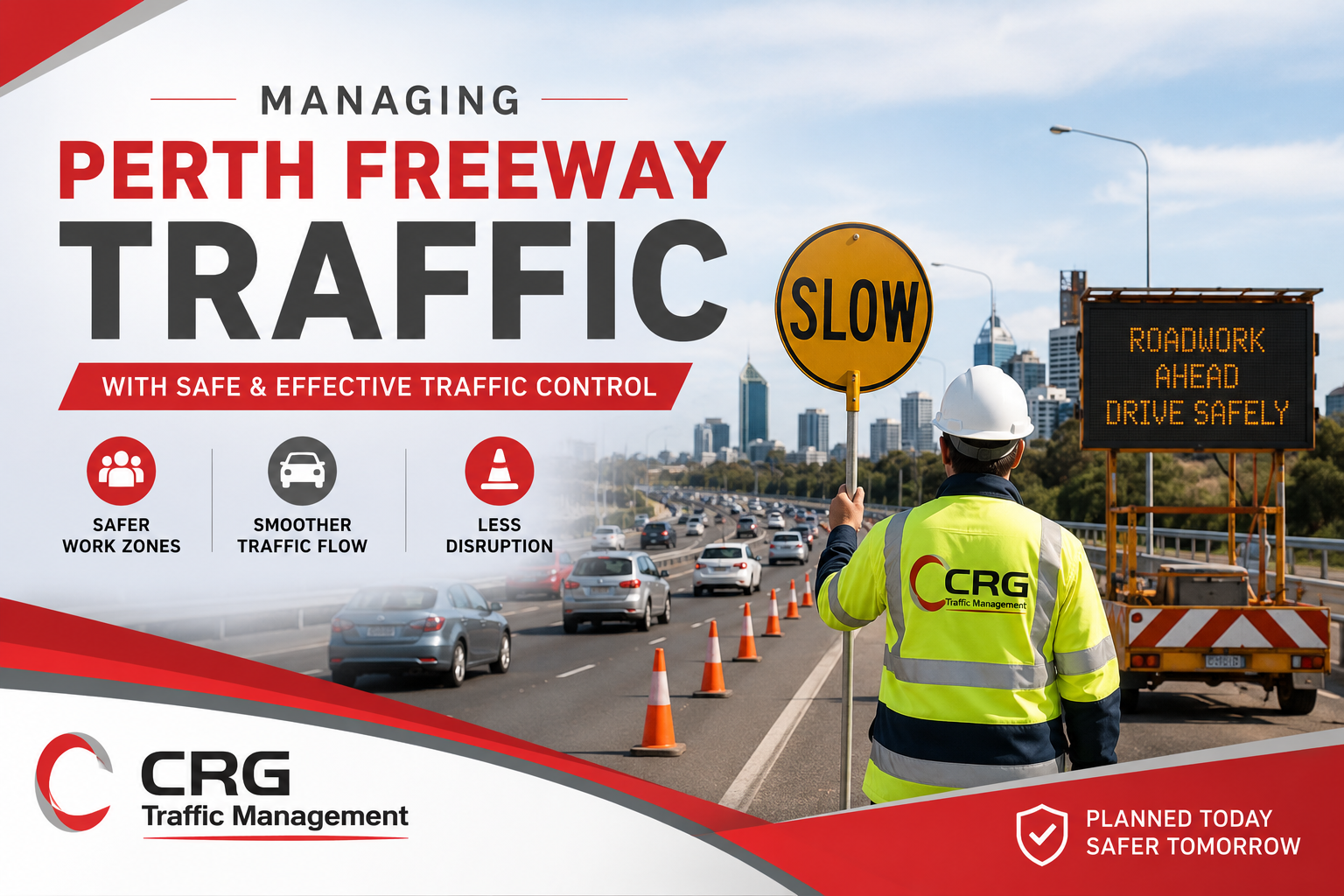
Why Traffic Control Is Important on Perth Roads
Perth continues to experience development, infrastructure upgrades and construction across metropolitan and regional areas. Every roadwork project has the potential to affect people who are not directly involved in the project.
A single lane closure can change traffic flow. A temporary footpath closure can affect pedestrians. A work vehicle entering a busy road can create an unexpected conflict. If these movements are not planned properly, drivers may become confused, and workers may be exposed to unnecessary risks.
Good traffic control Perth is therefore about creating a predictable environment.
Drivers should be able to understand what is happening ahead. Workers should know where moving traffic will travel. Pedestrians should have a clear and appropriate route. Construction vehicles should be able to enter and leave the site without creating unnecessary conflicts.
Think of traffic control as creating a temporary set of rules for a road. The normal rules of the road still apply, but the physical environment may have changed. Clear signs, appropriate devices and trained personnel help communicate those temporary changes.
Main Roads WA also reminds road users that roadworks can involve speed restrictions, lane restrictions and modified road layouts, and encourages motorists to follow signs and slow down around work zones.
The Role of Traffic Controllers
Traffic controllers are often the most visible part of a traffic management operation.
Their role involves communicating with road users and helping manage traffic movements according to the approved traffic arrangement. Depending on the site, controllers may direct vehicles, coordinate movements through a restricted section, manage pedestrian movements or assist with temporary changes to normal traffic conditions.
The role requires concentration and good communication. A traffic controller needs to remain aware of vehicles approaching from different directions while also watching the worksite.
This is why choosing appropriately trained personnel is important.
WA's traffic management requirements have continued to develop. The March 2026 Main Roads WA Code includes additional competency requirements relating to portable traffic control devices and temporary traffic signs for relevant Traffic Controller accreditation applications and renewals from 1 March 2026.
Main Roads WA has also introduced portable traffic signal training requirements as part of its accreditation framework.
These developments demonstrate how traffic control is becoming increasingly specialised.
Traffic Control Devices Used on Perth Worksites
Traffic control equipment provides road users with information about what they should expect and how they should respond.
Depending on the project, equipment may include temporary warning signs, regulatory signs, cones, barriers, delineation devices and portable traffic signals.
Each device has a purpose.
A warning sign can alert drivers that conditions ahead are changing. A regulatory sign can communicate an instruction that road users must follow. Cones and barriers can define the temporary road environment and separate traffic from the work area.
The placement of these devices is just as important as having them available.
A sign hidden behind vegetation is not particularly useful. A warning placed too close to a decision point may not give drivers enough time to respond. Equipment positioned incorrectly can also create additional hazards.
Professional traffic control Perth WA therefore involves more than having a truck full of signs and cones. It involves understanding where, when and why those devices need to be used.
Traffic Control for Road Construction
Road construction is one of the most common situations requiring temporary traffic management.
Construction may involve excavation, pavement works, drainage, kerbing, resurfacing, utility installation or major infrastructure upgrades. As the work progresses, the traffic arrangement may also need to change.
For example, the first stage of a project might require a shoulder closure. The second stage might require a lane closure. The third stage could involve a temporary traffic switch.
Each stage introduces different traffic conditions.
This is why traffic control needs to be considered as part of the entire construction program rather than treated as a one-time setup.
A professional traffic management provider can work with the construction team to understand upcoming stages and identify when the existing arrangement may need to be changed.
Traffic Control for Urban Roads
Urban roads present their own challenges.
Perth's metropolitan road network includes residential streets, commercial areas, arterial roads and major intersections. Traffic may include cars, trucks, buses, motorcycles, bicycles and pedestrians.
A worksite located close to an intersection can be particularly challenging.
Imagine a lane being closed only a short distance before a busy intersection. If traffic cannot move efficiently through the remaining lane, the resulting queue may extend backwards and interfere with another intersection.
This is why good perth traffic control considers the wider road environment.
Traffic management should not simply ask, "Can vehicles get past the worksite?"
It should also ask, "Where will the vehicles go after they get past it, and what happens if they cannot?"
Traffic Control Near Pedestrian Areas
Pedestrian safety is another important consideration.
Construction work can affect footpaths, shared paths, crossings and access to buildings. Simply placing a sign stating that a footpath is closed does not automatically create a suitable alternative route.
A pedestrian management arrangement should consider where people are likely to walk and whether the alternative path is accessible, visible and understandable.
This becomes particularly important near shops, schools, public transport stops, community facilities and busy commercial areas.
A well-planned traffic control arrangement treats pedestrians as active road users rather than an afterthought.
Traffic Control on Freeways and High-Speed Roads
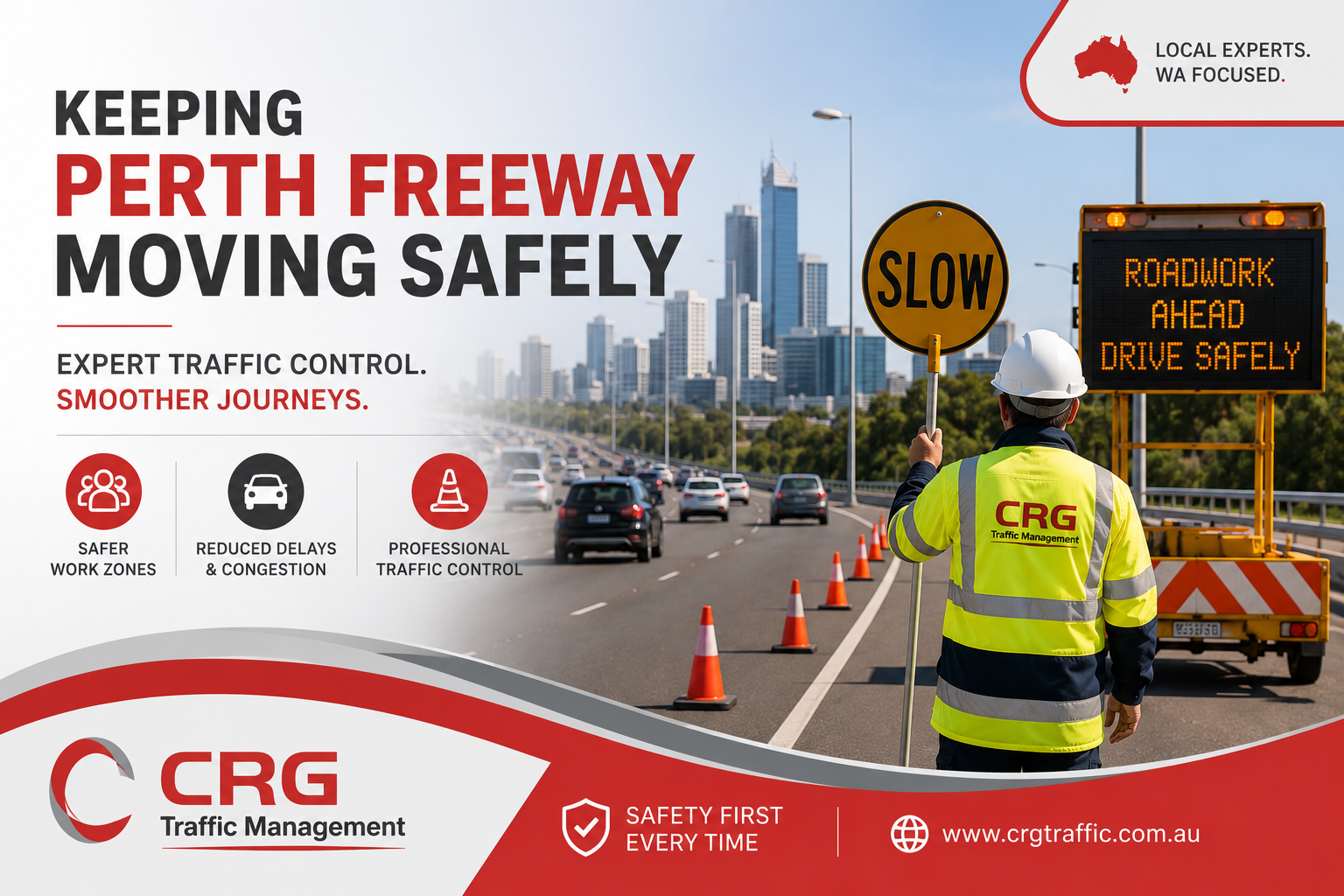
High-speed roads require careful planning because motorists have less time to respond to unexpected changes.
A driver travelling at a higher speed needs appropriate warning before reaching a lane closure or changed road layout. Temporary traffic control must therefore provide clear information and appropriate separation.
Freeway projects can also create significant congestion when capacity is reduced.
Even a single lane closure may have a much larger effect during peak periods. Queues can develop quickly, potentially affecting ramps, intersections and surrounding roads.
For this reason, freeway and high-speed road projects should be planned around actual traffic conditions and the specific characteristics of the location.
The same traffic arrangement used on a quiet suburban road should not simply be transferred to a major freeway environment.
The Importance of Speed Management
Speed management is a central part of temporary traffic management.
When workers are operating close to moving traffic, reducing vehicle speeds can help create a safer environment and give drivers more time to respond to changes.
Main Roads WA explains that speed control is an important component of effective traffic management and that speed zoning aims to balance road safety, transport efficiency and surrounding conditions.
Temporary speed restrictions need to be properly implemented and clearly communicated.
Drivers should never assume that a roadwork area is safe to travel through at the normal posted speed simply because workers are not immediately visible. Road layouts can remain uneven or restricted even when work crews are temporarily absent.
Main Roads WA specifically advises motorists to follow roadwork signs and remain cautious around temporary road conditions.
Why Good Planning Reduces Traffic Disruption
The goal of traffic management is not simply to stop traffic.
In many cases, the objective is to keep traffic moving while creating a safe working environment.
That requires planning.
If a project closes a lane without considering traffic volumes, congestion may become severe. If a pedestrian route is changed without considering where people naturally walk, pedestrians may ignore the arrangement. If construction vehicle access is poorly planned, trucks may block traffic while attempting to enter or leave the site.
Good planning anticipates these situations.
A professional team can consider work hours, traffic peaks, site access, staging and surrounding conditions when developing the temporary arrangement.
The result can be a smoother worksite with fewer unexpected interruptions.
How to Choose a Traffic Control Company in Perth
Choosing a traffic management provider is an important project decision.
The cheapest quote is not necessarily the best option if the provider cannot deliver the required level of planning, personnel and site support.
When comparing providers, consider their experience with similar projects. A company that regularly handles local roadworks may have different capabilities from one experienced with major freeway projects or large events.
Ask about:
Traffic management planning.
Site assessments.
Traffic controller availability.
Relevant accreditation and training.
Traffic control equipment.
Project staging.
Communication during works.
Monitoring and adjustments.
Experience with similar road environments.
It is also important to check whether the proposed arrangement satisfies the requirements of the relevant road authority.
Main Roads WA states that people or companies undertaking works on Main Roads roads require approval before works can commence, and its Working on Roads resources cover traffic management plans, training, accreditation, registration and works on roads.
Why Local Perth Experience Matters
Traffic conditions are not identical across Western Australia.
A provider with experience in Perth understands the practical challenges of working around busy metropolitan roads, suburban development, commercial areas and major transport corridors.
Local experience can also help teams anticipate common site issues.
For example, a project beside a busy shopping area may have different pedestrian and delivery patterns from a construction site in an industrial precinct.
Understanding these differences can make planning more practical.
That does not mean every Perth project is the same. Quite the opposite. It means local experience should be combined with a fresh assessment of each individual site.
The Future of Traffic Control Perth WA
Traffic management will continue to evolve as Perth grows and infrastructure projects become more complex.
New technology, improved planning methods and stronger training requirements are likely to influence how temporary traffic arrangements are designed and implemented.
Main Roads WA's continued updates to technical documents demonstrate that traffic management requirements are not static. Its Specification 202, for example, was updated in February 2026, while its Traffic Management for Works on Roads Code was published in a March 2026 edition.
For contractors and project managers, this means keeping up with current requirements is essential.
Outdated knowledge can lead to unsuitable arrangements, unnecessary delays and compliance issues.
The future of traffic control Perth will therefore depend on a combination of trained people, practical planning, suitable technology and a strong understanding of changing road environments.
Why Professional Traffic Control Makes a Difference
At the end of the day, traffic control is about people.
Some workers need to complete their jobs safely. Drivers need to understand temporary road conditions. Some pedestrians need to reach their destinations. Some businesses need access and communities need roads to remain usable.
A professional traffic management approach brings these competing needs together.
It does not promise that roadworks will never cause delays. That would be unrealistic. Instead, effective traffic control aims to make those disruptions controlled, understandable and as manageable as possible.
That distinction matters.
A roadwork project may require a lane to be closed. A queue may sometimes be unavoidable. A detour may sometimes be necessary.
The job of traffic management is to ensure these changes happen in a planned and controlled way.
Conclusion
Effective traffic control Perth WA is much more than signs, cones and traffic controllers. It is a complete process involving site assessment, planning, trained personnel, appropriate traffic control devices, communication and ongoing monitoring.
From small suburban maintenance projects to major infrastructure works, each project requires an arrangement that reflects its particular road environment. A busy intersection, pedestrian-heavy commercial area and high-speed road all present different challenges.
Current Main Roads WA requirements reinforce the importance of structured traffic management. The March 2026 Code of Practice establishes requirements for managing traffic around works on roads throughout Western Australia, while current Main Roads specifications and templates provide additional guidance for Traffic Management Plans.
For businesses and contractors planning work in Perth, choosing an experienced traffic management provider can help turn a complicated roadwork environment into a controlled and organised operation.
Good perth traffic control does not simply manage vehicles. It manages movement, communication, safety and expectations.
And when all of those pieces work together, roadworks can get done while Perth's roads continue to function as safely and efficiently as possible.