

Every construction or roadwork site has its own set of challenges. Workers may operate close to moving vehicles, trucks may need regular access, pedestrians may pass nearby, and existing traffic may be affected by temporary changes. Without proper planning, these different movements can quickly become confusing and increase the risk of incidents.
A site traffic management plan provides a structured approach to managing these movements. It sets out how vehicles, pedestrians and workers should interact around the worksite while helping the project team understand the temporary traffic arrangements.
A good plan is not simply a document prepared for compliance. It should be a practical guide that supports the people working on the site every day. When properly prepared and implemented, it can help create clearer traffic movements, improve communication, and reduce unnecessary disruption around construction activities.
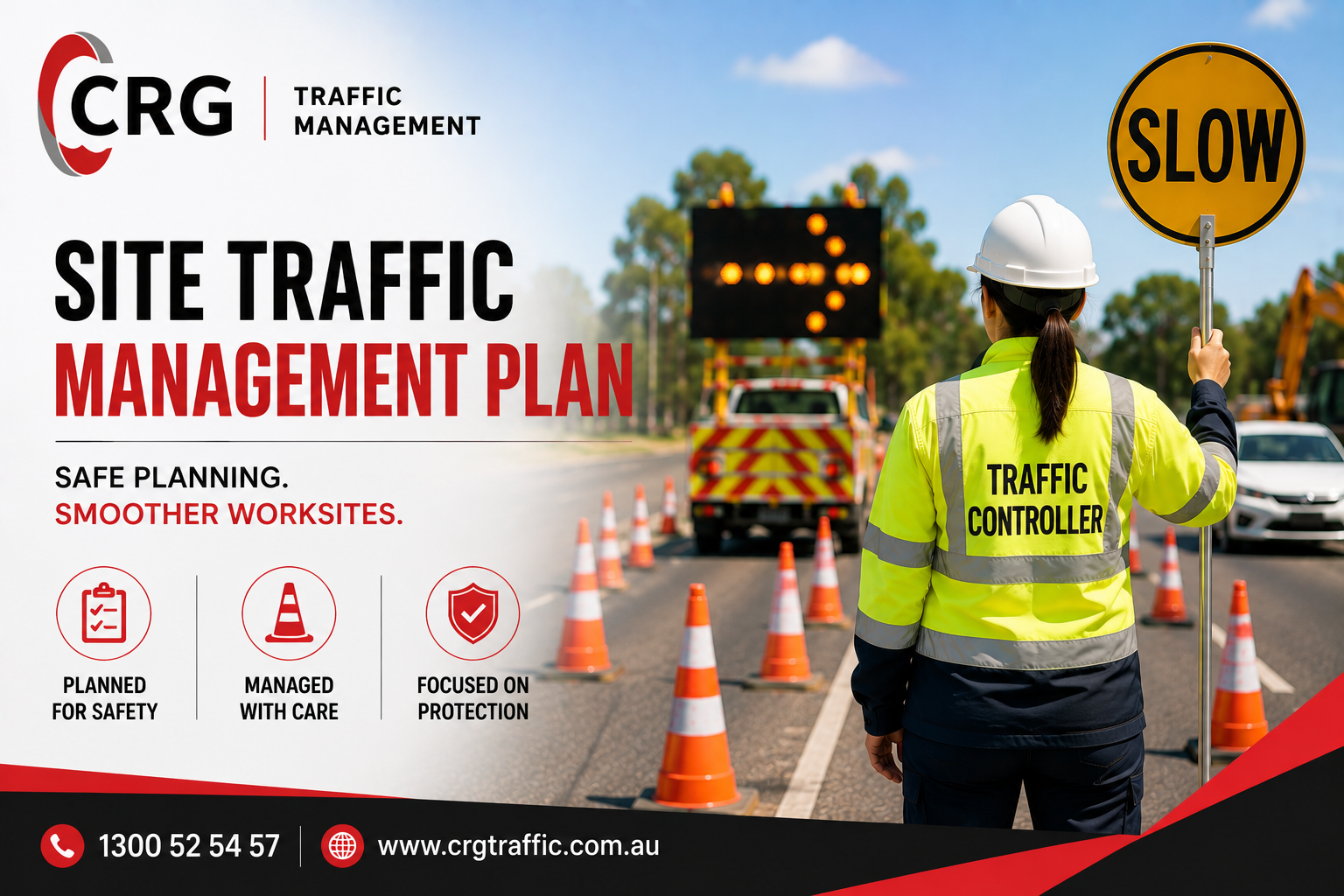
What Is a Site Traffic Management Plan?
A site traffic management plan is a detailed plan that explains how traffic and other road users will be managed around a particular worksite.
The plan is developed according to the conditions and activities associated with the site. This means it should consider factors such as the road layout, work area, traffic movements, pedestrian access, construction vehicles and the expected duration of the project.
No single arrangement works for every site.
A small maintenance project on a quiet street may require relatively simple controls, while a major construction project beside a busy road could require staged traffic arrangements, temporary lane closures, traffic controllers and additional safety measures.
The plan brings these elements together so everyone involved has a clear understanding of how the site should operate.
Why Traffic Planning Should Start Early
Traffic management should not be treated as something to organise at the last minute.
Before construction begins, the project team should consider how the work will affect existing traffic movements. Waiting until equipment and workers are already on site can make it much harder to identify practical solutions.
Early planning gives the team time to assess potential problems.
For example, where will construction vehicles enter? How will workers access the site? What happens if a lane needs to be closed? Will pedestrians still have a safe route? Could vehicles queue back towards an intersection?
These questions are easier to address during the planning stage than after work has started.
A well-prepared traffic management plan allows traffic arrangements to become part of the overall construction schedule rather than an afterthought.
What Should a Site Traffic Management Plan Consider?
Every project is different, but several important factors should generally be considered when developing a site traffic arrangement.
Existing Road Conditions
The surrounding road needs to be understood before temporary controls are introduced.
This can include road width, lane configuration, speed environment, intersections, nearby driveways and existing signs or markings.
Traffic Movements
The plan should consider how vehicles currently move through the area and how construction activities will change those movements.
Busy periods may also need to be considered when planning work stages.
Pedestrian Access
Pedestrians should not be forgotten simply because the main focus is vehicle traffic.
If a footpath or crossing is affected, people need a clear and practical alternative route.
Construction Vehicles
Large vehicles entering or leaving a worksite can create additional risks, particularly when access points are located close to moving traffic.
Their movements should be considered as part of the overall arrangement.
Worksite Changes
Construction sites rarely stay the same throughout a project.
As work progresses, the work area may move, access points may change and traffic lanes may need to be adjusted. A suitable plan should allow these stages to be managed properly.
Traffic Management Plan vs Traffic Control Plan
The terms traffic management plan and traffic control plan are sometimes used interchangeably, but they can refer to different aspects of traffic management depending on the project and terminology being used.
A traffic management plan generally provides the broader framework for managing road users around the worksite.
A traffic control plan can focus more specifically on how traffic control devices, signs, cones, barriers and traffic controllers will be arranged and used.
Think of it this way: the traffic management plan is the bigger picture, while the traffic control plan can show how specific controls will be implemented on the ground.
Both need to work together.
A beautifully prepared plan is of little value if the actual traffic controls do not match the conditions at the site.
The Role of Traffic Controllers
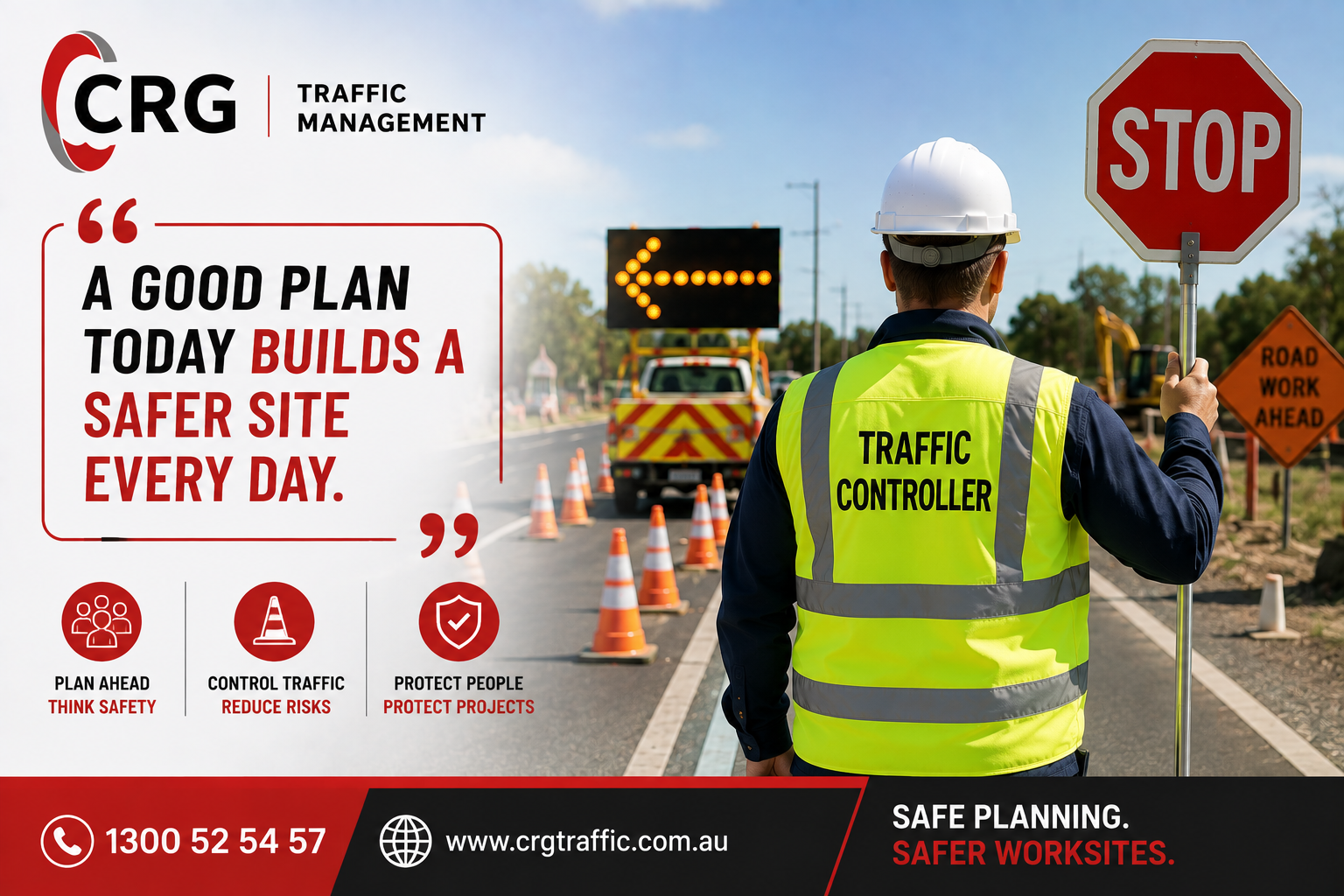
Traffic controllers can be an important part of a site's traffic management arrangement.
Their role may involve directing vehicles, managing temporary traffic movements, assisting pedestrians and communicating with other members of the worksite team.
However, traffic controllers should not be expected to solve poor planning on their own.
They need a clear traffic arrangement to work from.
When the plan, equipment and personnel are properly coordinated, traffic controllers can focus on managing movements rather than trying to figure out what should happen next.
Clear communication between controllers, supervisors and workers is therefore essential.
Managing Construction Vehicle Access
Construction sites often have frequent vehicle movements.
Concrete trucks, delivery vehicles, machinery and other heavy vehicles may need to enter and leave the site throughout the day.
If these movements are not properly considered, they can interfere with public traffic or create conflicts near the site entrance.
A site traffic management plan should identify how site vehicles will interact with surrounding traffic.
Where appropriate, access points can be planned to provide better visibility and reduce unnecessary interaction with passing vehicles.
The timing of deliveries may also be considered, particularly where the surrounding road becomes busy at certain times.
Protecting Pedestrian Movement
A temporary worksite can be confusing for pedestrians.
A familiar footpath may suddenly be closed, a crossing may change or construction barriers may force people to take another route.
A good traffic arrangement should make the alternative route obvious.
Pedestrians should not have to guess where they are supposed to walk.
This is particularly important around commercial areas, schools, public transport locations and busy pedestrian routes.
Simple, visible and well-planned pedestrian arrangements can help people move around construction areas with greater confidence.
Traffic Control Equipment
Traffic control equipment supports the plan by communicating temporary changes to road users.
Depending on the project, this can include:
Temporary warning signs
Regulatory signs
Traffic cones
Barriers
Delineation devices
Temporary traffic signals
Pedestrian controls
Variable message signs
The important point is that equipment needs to be used as part of a coordinated system.
Putting out more signs does not automatically create better traffic management. Signs need to be relevant, visible and positioned where road users have enough time to understand the instruction.
The same principle applies to cones and barriers. Their placement should create a clear and logical path through the work area.
Why Site Conditions Matter
A plan should reflect the real conditions of the site.
A traffic arrangement that works well on a quiet suburban street may not be suitable for a major arterial road.
Similarly, a setup that works during a short daytime shift may need to be reconsidered if the work continues into the evening.
Weather, visibility, traffic volumes, nearby businesses and changing construction activities can all affect how traffic management operates.
This is why experienced traffic management professionals assess the site before recommending an arrangement.
Reviewing the Plan During Construction
One of the biggest mistakes is assuming that a traffic plan never needs to change.
Construction is dynamic.
A project may move into a new stage, the work area may become larger or a new access point may be required. These changes can affect the original traffic arrangement.
Regular communication between the traffic management team and site supervisors helps identify when adjustments may be necessary.
The goal is not to change the plan unnecessarily. It is to make sure the arrangement continues to reflect what is actually happening on the ground.
Common Mistakes to Avoid
Several simple mistakes can reduce the effectiveness of traffic management.
One is failing to consider traffic conditions outside normal working hours. Another is overlooking pedestrian access until construction has already started.
Poor communication can also cause problems. If workers change the work area without informing the traffic management team, the existing controls may no longer match the site.
Another common issue is treating the traffic control plan as a document rather than a practical working arrangement.
Everyone involved should understand their responsibilities and know what to do when conditions change.
Choosing a Professional Traffic Management Provider
The quality of a traffic management arrangement depends heavily on the people responsible for planning and implementing it.
When choosing a provider, consider their experience with projects similar to yours. A provider familiar with roadworks, construction sites and changing traffic conditions can often identify practical challenges earlier in the planning process.
It is also useful to consider their ability to provide trained personnel, appropriate equipment and ongoing support throughout the project.
The cheapest option is not necessarily the most suitable one.
Traffic management is closely connected to worksite safety, project efficiency and public access. Choosing a provider based on capability and reliability can be a better long-term decision.
Creating a More Organised Worksite
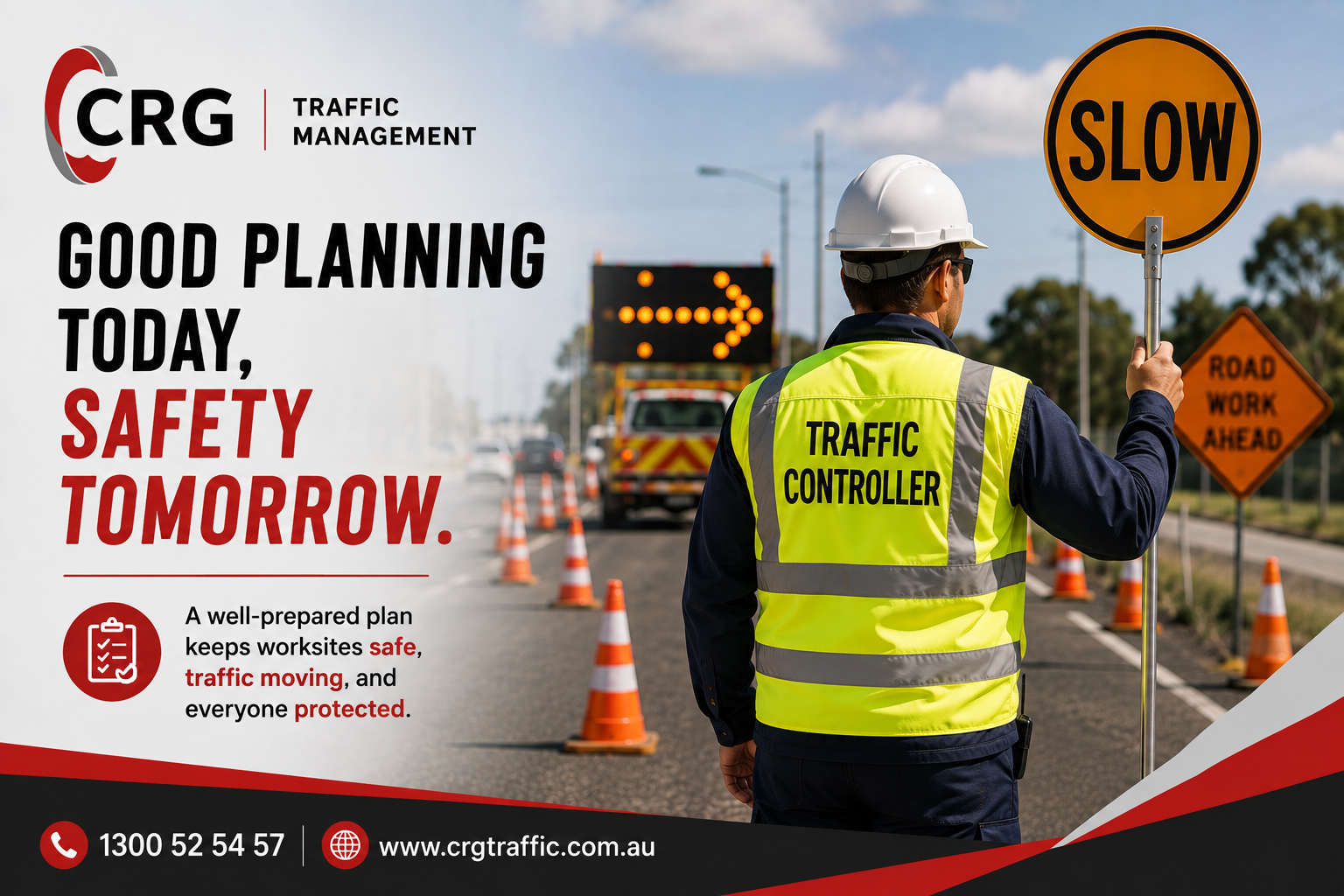
A well-prepared site traffic management plan gives everyone a clearer picture of how the worksite should operate.
Workers understand where traffic will move. Drivers receive clearer instructions. Pedestrians have defined routes. Construction vehicles have planned access.
That organisation can make a busy worksite feel much more controlled.
It also allows the construction team to identify potential problems before they become operational issues.
Good planning does not mean that every project will be completely free from delays. Roadworks naturally affect normal traffic. The objective is to manage those effects responsibly and keep unnecessary confusion to a minimum.
Conclusion
A site traffic management plan is an important part of planning any project that affects vehicle or pedestrian movements. It brings together site conditions, traffic movements, pedestrian access, construction activities, traffic control devices and personnel into one practical approach.
A strong traffic management plan should reflect the actual site rather than relying on a generic arrangement. At the same time, a well-developed traffic control plan helps translate the overall strategy into practical controls that road users and workers can understand.
Most importantly, traffic management should continue throughout the project. As construction changes, the traffic arrangement may need to change with it.
With careful planning, clear communication and experiencedtraffic management personnel, contractors can create a worksite that is safer, more organised and easier for everyone to navigate.