

From music festivals and sporting events to community celebrations and corporate gatherings, successful events require much more than entertainment and logistics. One of the most critical elements behind every well-organised event is effective Event Traffic Management. Whether an event attracts hundreds or thousands of attendees, managing vehicle movement, pedestrian safety, parking areas, emergency access, and road closures is essential for creating a safe experience for everyone involved.
Large crowds naturally create increased traffic around event venues. Without proper planning, congestion, confusion, and safety risks can quickly develop, affecting not only attendees but also local residents and businesses. Professional traffic management ensures vehicles move efficiently while protecting pedestrians and maintaining access for emergency services. By carefully coordinating every aspect of traffic flow before, during, and after an event, organisers can minimise delays and deliver a positive experience for guests.
As Perth continues to host more public events each year, professional traffic management has become an essential part of event planning rather than an optional service. Investing in experienced traffic specialists helps organisers reduce risks, improve efficiency, and maintain compliance with Western Australian safety requirements.
Why Traffic Management Is Essential for Events
Every event presents unique challenges. A sporting event may generate heavy traffic over a short period, while a weekend festival may experience continuous vehicle movement throughout the day. Regardless of the event type, careful planning ensures visitors arrive safely, emergency services remain accessible, and nearby roads continue operating as efficiently as possible.
Professional traffic management begins well before event day. Specialists assess the venue, surrounding roads, expected attendance, parking capacity, public transport options, and potential risks. Based on this assessment, they develop practical strategies that minimise congestion while maintaining safe vehicle and pedestrian movement.
Good planning also improves the overall visitor experience. Attendees spend less time searching for parking, waiting in queues, or navigating confusing road closures. Instead, they enjoy smoother access to the venue, helping create a positive first impression before the event even begins.
What Does Event Traffic Management Include?
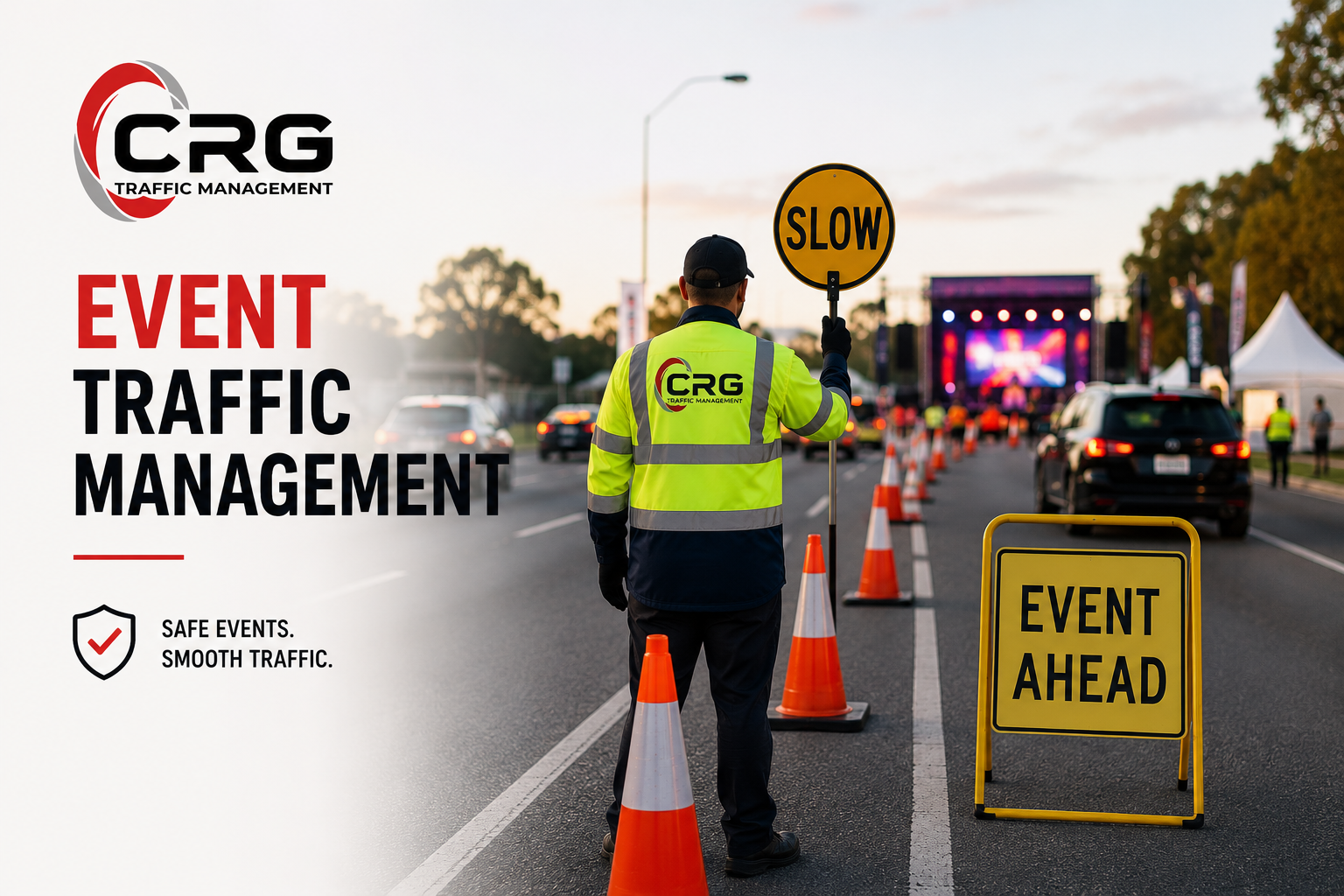
Professional Event Traffic Management involves much more than directing vehicles into parking areas. It combines planning, communication, safety procedures, and experienced personnel to ensure every stage of the event operates efficiently.
Traffic management teams coordinate temporary road closures, establish safe pedestrian crossings, install warning signs and barriers, manage vehicle entry and exit points, and maintain emergency access routes. Qualified traffic controllers supervise vehicle movements throughout the event while responding quickly to changing traffic conditions.
Planning also includes coordination with local councils, emergency services, public transport providers, security teams, and event organisers. This collaborative approach ensures every stakeholder understands their responsibilities before the event begins.
By combining preparation with real-time monitoring, professional traffic management helps prevent problems before they occur while maintaining a safe environment for visitors and staff.
Planning Is the Foundation of Every Successful Event
Every successful event begins with a detailed event traffic management plan. This document outlines how traffic will be managed before, during, and after the event while identifying potential hazards and appropriate control measures.
The planning process includes analysing expected attendance, peak arrival times, nearby intersections, pedestrian routes, parking facilities, public transport access, and emergency vehicle requirements. Temporary speed limits, directional signage, road closures, and traffic controller locations are all determined during this stage.
A well-prepared plan provides clear guidance for everyone involved, reducing confusion on the day of the event. It also allows organisers to respond more effectively if unexpected situations arise, such as severe weather, increased attendance, or emergency incidents.
Comprehensive planning not only improves safety but also supports smoother event operations from start to finish.
Managing Vehicle and Pedestrian Movement
Events often involve thousands of people arriving and leaving within relatively short timeframes. Without proper coordination, this can quickly lead to congestion, long queues, and increased safety risks.
Professional traffic controllers manage vehicle flow using temporary traffic control devices, portable signs, barriers, and clear communication. Parking areas are organised to maximise capacity while ensuring vehicles can enter and exit efficiently.
Pedestrian safety receives equal attention. Clearly marked walkways, supervised crossings, protective barriers, and dedicated pedestrian routes reduce interactions between vehicles and people walking to and from the venue.
Maintaining separate pathways for vehicles and pedestrians significantly improves overall safety while creating a more organised environment for everyone attending the event.
The Role of Qualified Traffic Controllers
Experienced traffic controllers are central to successful event operations. Their role extends well beyond directing vehicles. They continuously monitor traffic conditions, communicate with event organisers, and respond immediately to changing situations throughout the day.
Traffic controllers help prevent congestion by adjusting vehicle flow as traffic volumes change. They provide clear directions to motorists, assist pedestrians at busy crossing points, and coordinate closely with emergency services whenever necessary.
Their experience allows them to identify potential hazards before they become larger issues. Whether responding to unexpected road closures, vehicle breakdowns, or sudden increases in attendance, qualified traffic controllers provide flexibility that static traffic control devices alone cannot achieve.
Their calm communication and professional approach help create a safe and welcoming environment for visitors while supporting efficient event operations.
Supporting Different Types of Events
Professional traffic management services support a wide variety of public and private events across Western Australia. Sporting competitions, music festivals, agricultural shows, charity events, exhibitions, concerts, cultural celebrations, and corporate functions all require customised traffic management strategies.
Every venue presents different challenges depending on surrounding road networks, available parking, public transport access, and expected visitor numbers. Large outdoor festivals require different traffic arrangements compared with stadium events or city-based celebrations.
Experienced traffic management teams adapt their planning to suit each location while ensuring safety remains the highest priority throughout every stage of the event.
Why Experience Matters
Choosing experienced event traffic management companies provides organisers with confidence that every aspect of traffic safety has been carefully considered. Established providers understand local regulations, council requirements, emergency procedures, and the practical challenges associated with managing large crowds.
Experienced teams work closely with organisers from the earliest planning stages, identifying potential issues and developing practical solutions before event day. Their proactive approach helps reduce risks while improving efficiency for visitors, staff, contractors, and emergency services.
Professional providers also invest in ongoing training, modern equipment, and continuous improvement to ensure every event is managed according to current industry standards.
Choosing the Right Event Traffic Management Provider
Selecting the right traffic management provider is one of the most important decisions for any event organiser. A professional company does far more than position traffic cones or direct vehicles. It becomes an essential partner that helps protect attendees, supports emergency services, and ensures the event operates smoothly from start to finish. Whether it is a local community festival or a large-scale sporting event, experienced professionals understand how to manage traffic safely while minimising disruption to surrounding roads and businesses.
Reliable providers begin by understanding the event's specific requirements. They assess the venue, expected attendance, nearby intersections, parking facilities, public transport access, and surrounding residential areas before developing tailored traffic solutions. This proactive approach helps identify potential challenges well before event day, allowing organisers to focus on delivering a successful event.
Professional providers also maintain clear communication throughout the planning process. They work closely with councils, emergency services, security teams, contractors, and event organisers to ensure everyone understands their responsibilities. Strong coordination between all stakeholders reduces confusion and allows the event to operate efficiently even if unexpected situations arise.
Using Technology to Improve Event Safety
Technology continues to transform how traffic is managed during public events. Modern equipment allows traffic management teams to respond more quickly while providing better information to motorists and event organisers.
Portable electronic message boards can display live traffic information, warning drivers about road closures, parking availability, or alternative routes before they reach the venue. GPS communication systems allow supervisors to coordinate multiple traffic controllers across large event sites while maintaining constant contact with security teams and emergency services.
A professionally designed event traffic management plan also benefits from digital planning software, allowing organisers to visualise traffic movements before the event begins. These systems help identify potential congestion points, improve vehicle flow, and reduce unnecessary delays.
Although technology improves efficiency, experienced traffic controllers remain essential. Their ability to assess changing conditions and make immediate decisions ensures visitors continue moving safely throughout the event.
Emergency Access and Risk Management
Every event must be prepared for unexpected situations. Medical emergencies, severe weather, vehicle breakdowns, or sudden changes in attendance can all affect traffic conditions. Professional traffic management providers develop contingency strategies that allow emergency services to reach the venue quickly without unnecessary delays.
Emergency access routes remain clear throughout the event, ensuring ambulances, police, and fire services can respond immediately if required. Traffic controllers receive instructions on emergency procedures and maintain communication with event management teams should conditions change unexpectedly.
Risk management is equally important. Before the event begins, planners identify hazards that could affect vehicle or pedestrian safety and develop practical solutions to reduce those risks. Continuous monitoring throughout the event ensures traffic arrangements remain effective as conditions change.
This level of preparation provides confidence for organisers while improving public safety for everyone attending the event.
Benefits for Event Organisers and the Community
Professional traffic management delivers benefits that extend well beyond the event itself. Organisers gain confidence knowing experienced professionals are managing one of the most critical operational aspects of the event. Visitors enjoy smoother arrivals and departures, reducing frustration and improving their overall experience.
Local businesses and residents also benefit when traffic is managed efficiently. Well-planned road closures, clear diversion routes, and organised parking minimise disruption to surrounding communities while maintaining access wherever possible.
Reduced congestion also contributes to lower vehicle emissions by limiting unnecessary idling and stop-start traffic. Better traffic flow supports both environmental sustainability and improved community relations, making professional traffic management an investment that benefits everyone involved.
Why Choose CRG Traffic Management
When planning an event, working with an experienced provider can make a significant difference to both safety and operational success. CRG Traffic Management provides professional traffic management solutions across Perth and Western Australia, supporting community events, sporting competitions, festivals, concerts, infrastructure projects, and commercial developments. With qualified traffic controllers, comprehensive planning, modern equipment, and a strong commitment to safety, the team delivers reliable solutions tailored to each event's unique requirements. Every project is managed with professionalism, clear communication, and a focus on protecting both workers and the public.
The Future of Event Traffic Management
Public events continue to grow in size and complexity, increasing the demand for smarter traffic management solutions. Future developments will see greater integration between intelligent transport systems, live traffic monitoring, and digital communication platforms that provide real-time information to both organisers and motorists.
Artificial intelligence and predictive traffic modelling are expected to assist planners in identifying congestion before it develops, allowing traffic management teams to respond proactively. While these technologies will improve efficiency, experienced professionals will remain at the centre of successful event operations.
As Perth continues to host more major events, professional traffic management will become increasingly important for maintaining public safety, reducing congestion, and delivering positive visitor experiences. Organisations that invest in experienced traffic management providers will be better positioned to manage growing attendance while maintaining the highest safety standards.
Conclusion
Successful events depend on careful planning, effective communication, and a strong commitment to public safety. Professional Event Traffic Management ensures vehicles, pedestrians, emergency services, and event staff can move safely throughout every stage of an event while minimising disruption to surrounding communities.
Working with experienced event traffic management companies allows organisers to reduce risks, improve visitor experiences, and maintain compliance with Western Australian safety requirements. A detailed event traffic management plan, supported by qualified traffic controllers and modern equipment, creates an organised environment where events can operate smoothly from beginning to end.
Whether managing a community festival, sporting event, concert, or major public gathering, investing in professional traffic management services provides lasting benefits for organisers, attendees, and the wider community. Safe traffic management is not simply about controlling vehicles—it is about creating successful events where people can arrive, enjoy the experience, and return home safely.