

Why Traffic Management Is Essential for Your Next Lift
Planning a lift involves much more than choosing the right crane, checking equipment, and arranging qualified operators. When lifting work takes place near a road, construction entrance, public area, or active worksite, traffic can become an important part of the project. Vehicles may need to pass close to the lifting area, delivery trucks may need access, and pedestrians may move around the site while the lift is taking place.
This is why traffic management should be considered before the lifting operation begins. A well-planned traffic arrangement can help separate people, vehicles and lifting activities, reduce confusion and create a more organised work area.
For construction companies and contractors across Perth, involving an experienced traffic management team early can make the lifting process easier to coordinate from start to finish.
Why Lifting Operations Need Traffic Planning
A lifting operation can temporarily change a worksite's normal layout.
A crane may need to be positioned near a roadway, a truck may require space to reverse into the site, or part of a traffic lane may need to be restricted while equipment is moved into position. Even when the actual lift only takes a short time, the surrounding traffic conditions still need to be considered.
Without proper planning, workers may have to deal with vehicles moving too close to the lifting zone or pedestrians entering areas where equipment is operating.
Traffic management helps establish a clear system for these movements.
The objective is simple: make sure everyone understands where they should be and how they should move while the lift is underway.
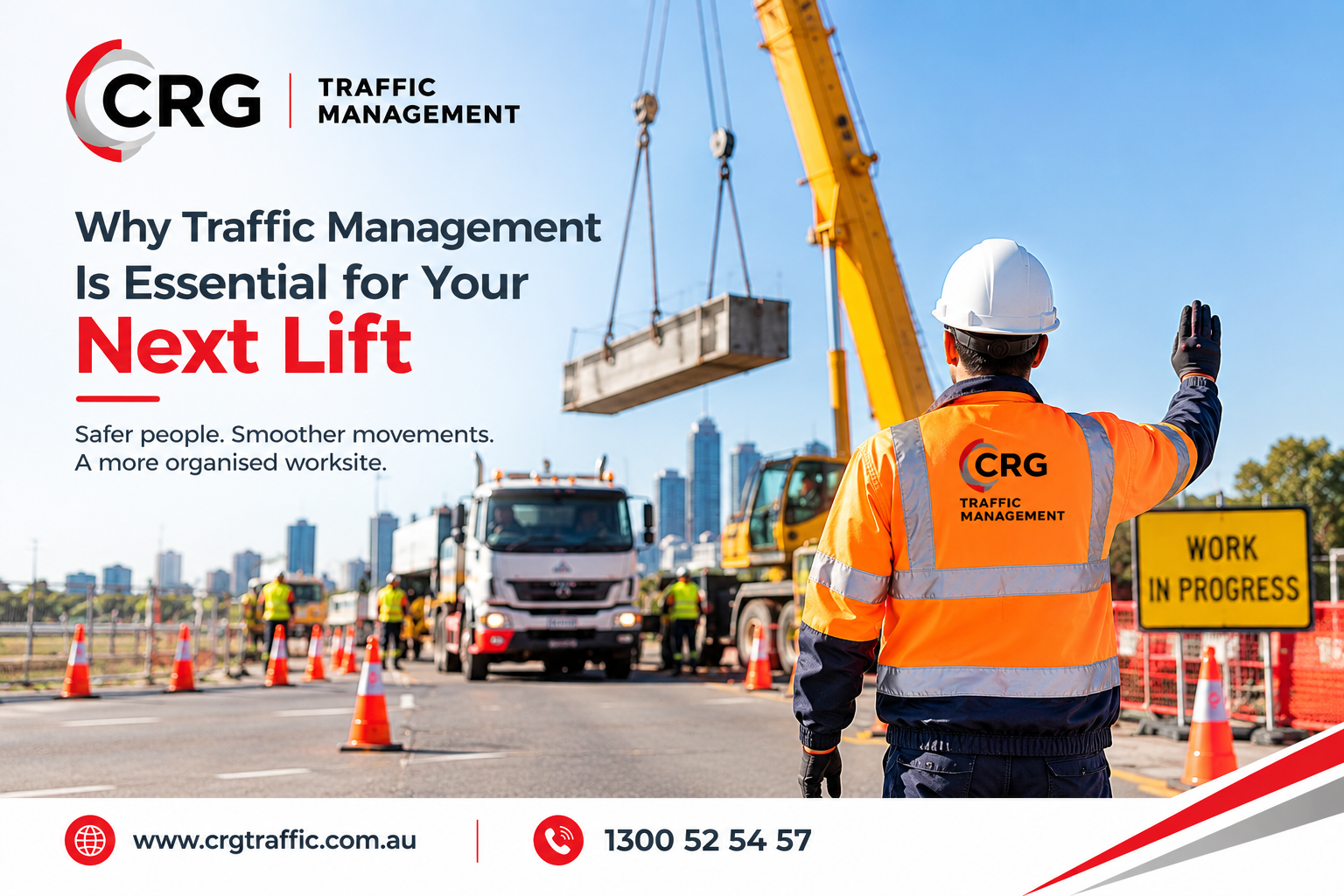
What Can Traffic Management Cover During a Lift?
The requirements will depend on the location, size, and duration of the lifting operation. A traffic management arrangement may include several different elements.
These can include:
Vehicle entry and exit arrangements
Temporary lane restrictions
Traffic controllers
Pedestrian management
Temporary signage
Cones and barriers
Delivery vehicle coordination
Worksite access controls
Traffic diversions where required
Coordination between site personnel
Not every lift will require all of these measures.
The important point is to assess the actual conditions before deciding what controls are appropriate.
Protecting the Lifting Area
One of the most important reasons for traffic management is creating a clear boundary around the lifting operation.
Cranes, trucks and other equipment can require considerable space. Workers may also need room to prepare loads, connect equipment, and communicate during the operation.
Public vehicles should not be allowed to enter this working area unexpectedly.
A properly planned traffic arrangement can help create separation between moving traffic and the lifting zone. Depending on the site, this may involve barriers, cones, signs or traffic controllers.
This creates a more predictable environment for both the lifting crew and people travelling past the site.
Managing Vehicles Around the Site
Vehicle movements can become complicated when a lift is taking place.
A delivery truck may need to enter the site just before the lift begins. Another vehicle may need to leave while the crane is operating. Public traffic may also continue to pass along an adjacent road.
These movements need to be considered as part of the overall plan.
A traffic management team can help establish when and where vehicles should enter or leave the site. Where direct control is required, traffic controllers can communicate with drivers and coordinate movements with the site team.
This can reduce unnecessary vehicle movements during critical stages of the lift.
Pedestrian Safety Should Not Be Overlooked
People walking near a lifting operation can be affected just as much as motorists.
Construction sites may have workers, contractors, visitors, customers or members of the public moving around the surrounding area.
If a normal pedestrian route is affected by equipment or vehicle movements, people need a clear alternative.
Pedestrian management can help prevent people from accidentally walking into areas where lifting activities are taking place.
Clear signs, barriers and designated walkways can make the intended route easier to understand.
Traffic Controllers During Lifting Operations
Traffic controllers can play an important role when a lift affects public roads or vehicle movements around a worksite.
Their responsibilities may include controlling traffic, assisting with vehicle access, supporting pedestrian movements, and communicating with the lifting team.
However, traffic controllers should be part of a properly planned system rather than being expected to manage an unclear worksite on their own.
Before the lift begins, everyone involved should understand the traffic arrangement and their responsibilities.
Good communication between the traffic controller, crane crew, site supervisor, and other workers can make the operation more organised.
Planning the Lift Before the Day
One of the biggest advantages of early traffic planning is that it gives the project team time to identify potential problems.
Before the lifting day, consider questions such as:
Where Will the Crane Be Positioned?
The crane location can affect road space, pedestrian access, and nearby vehicle movements.
How Will Equipment Arrive?
Large vehicles may require additional space to enter, position themselves or leave the site.
Will Traffic Be Affected?
If the lift takes place beside an active road, temporary restrictions or traffic controls may be required.
Where Will Pedestrians Walk?
Any affected footpath or pedestrian route should be considered before equipment arrives.
How Long Will the Traffic Arrangement Be Required?
The traffic setup may need to cover preparation, the actual lift, and the removal of equipment.
Thinking through these details early can help prevent last-minute changes.
Avoiding Unnecessary Traffic Disruption
Traffic management is not only about safety. It can also help keep the surrounding area moving.
Poorly planned lifting activities can result in unnecessary queues, blocked access, and confusion for drivers.
For businesses located near a construction site, this can be particularly frustrating. Customers and suppliers may still need to reach the property while the lift is taking place.
A practical traffic arrangement can help maintain access wherever reasonably possible while still providing the necessary separation around the lifting operation.
The goal is to balance the needs of the project with the needs of the surrounding community.
Why Local Experience Matters in Perth
Every lifting location has different conditions.
A lift on a quiet industrial street is very different from one beside a busy Perth road. Projects near commercial areas may involve more pedestrians, while work near major traffic routes can require greater consideration of vehicle movements.
This is where local traffic management experience can be useful.
A team familiar with Perth worksites can assess the surrounding environment and help develop an arrangement that suits the project rather than relying on a generic approach.
At CRG Traffic Management, traffic planning focuses on practical site requirements, safety and the need to minimise unnecessary disruption.
Communication Is Key
Even a well-prepared traffic arrangement can become ineffective if people do not communicate.
The lifting team should know when traffic controls will be introduced. Traffic controllers need to understand the lifting sequence and any changes that may affect vehicle or pedestrian movements.
Site supervisors should also communicate changes to the traffic management team.
For example, if the crane position changes or the lifting area becomes larger than originally expected, the traffic arrangement may need to be reviewed.
Keeping everyone informed helps ensure that the plan remains aligned with what is actually happening on site.
What to Consider When Hiring a Traffic Management Company
If your next lift will affect roads, pedestrians, or vehicle access, it is worth involving a traffic management provider early.
Look for a team that understands construction environments and can work alongside your project team.
Important considerations can include:
Experience with construction and lifting activities
Qualified and appropriately trained personnel
Practical site planning
Suitable traffic control equipment
Clear communication
Ability to manage changing site conditions
Understanding of local traffic environments
The right provider should be able to work as part of the wider project rather than treating traffic control as a separate task.
How CRG Traffic Management Can Help
At CRG Traffic Management, we understand that every construction project has different traffic requirements.
Our team can assist with traffic management planning and on-site traffic control for projects where lifting activities may affect vehicle or pedestrian movements.
By considering access, traffic flow, worksite conditions and safety before the lift begins, the project team can create a more organised environment for everyone involved.
The aim is not simply to stop traffic. It is to create a clear system that allows the lifting operation and surrounding road users to interact safely and efficiently.
Final Thoughts
A lifting operation can involve large equipment, heavy loads, construction vehicles and workers operating within a limited area. When that activity takes place near public roads or pedestrian routes, traffic management becomes an important part of the planning process.
Good traffic management helps create clear boundaries, organise vehicle movements, manage pedestrian access and reduce unnecessary disruption around the worksite.
For your next lift, don't wait until the crane arrives to think about traffic. Bringing the traffic management team into the planning process early can help identify challenges before they become problems and give everyone a clearer understanding of how the site will operate.
With careful planning, clear communication and experienced traffic control personnel, your lifting operation can be better organised from the first vehicle arrival through to the completion of the lift.