

When Is a Traffic Management Plan Required?
Roadworks, construction projects, infrastructure upgrades, and public events can all change how people and vehicles move through an area. When these activities affect a road, footpath, intersection, or nearby public space, careful planning is needed to keep workers and road users safe.
A traffic management plan provides a clear framework for managing these changing conditions. It sets out how vehicles, pedestrians, cyclists, workers and construction equipment should move around an active work area while helping minimise disruption to normal traffic.
At CRG Traffic Management, we provide traffic management solutions across Perth and Western Australia. Our approach combines practical site assessment, experienced planning and on-site traffic control to create arrangements that suit the specific requirements of each project.
What Is a Traffic Management Plan?
A traffic management plan is a document that explains how traffic and other road users will be managed around a worksite or activity.
The plan considers the existing road environment and identifies how proposed works could affect normal traffic movements. It can cover temporary traffic controls, lane closures, pedestrian routes, vehicle access, traffic controllers, signage, traffic control devices and emergency arrangements.
The requirements of a project will determine what needs to be included. A small local road project may have very different requirements from major roadworks on a busy Perth arterial road.
At CRG, traffic planning is based on the conditions and risks associated with the individual site. This can include consideration of traffic volumes, peak periods, road geometry, vehicle types, bike lanes, school crossings, hazards and emergency procedures.
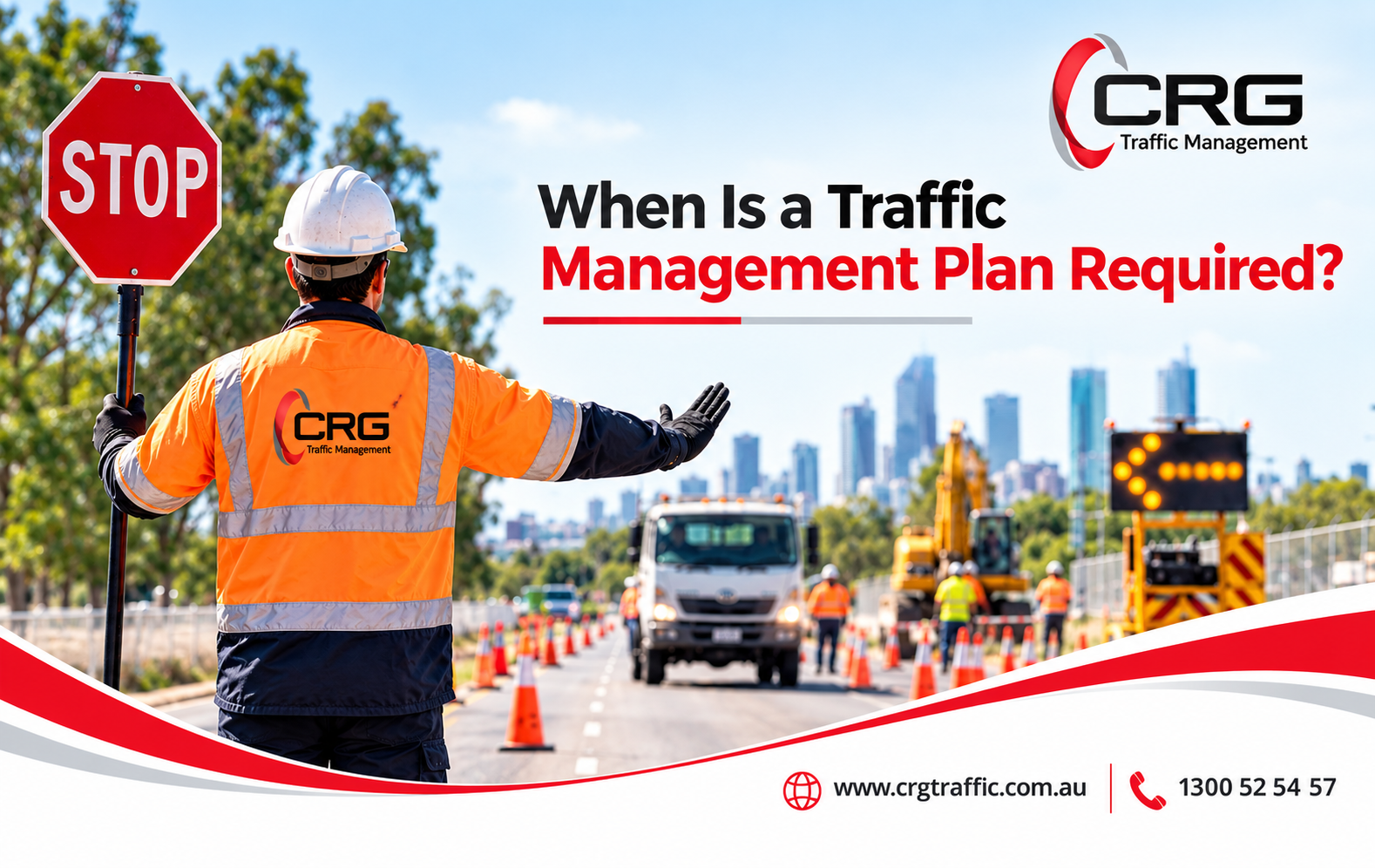
When Is a Traffic Management Plan Required?
A traffic management plan may be required when construction, maintenance, events or other activities can affect the normal movement of vehicles or pedestrians.
Common examples include:
Road construction and maintenance
Civil construction projects
Lane closures
Temporary road closures
Utility installation and repairs
Drainage and excavation works
Infrastructure projects
Construction sites near public roads
Large vehicle or load movements
Events and festivals
Works affecting footpaths
Projects affecting bicycle lanes
Activities near intersections
Construction access from public roads
The exact requirements will depend on the location, type of work, duration, traffic conditions and potential risks.
Roadworks and Maintenance
Roadworks are one of the most common situations requiring traffic management.
Activities such as resurfacing, pavement repairs, drainage installation, road widening, kerb works and line marking can place workers and equipment close to moving traffic.
Even a temporary work area can change the way motorists approach a section of road. A lane may need to be closed, traffic may need to merge, or vehicles may need to travel around the work area.
A well-prepared plan helps determine how these movements should be managed before work begins.
For projects in busy areas of Perth, planning can be particularly important because traffic volumes can vary significantly throughout the day. Morning and afternoon peak periods may create different challenges from quieter periods.
CRG can develop traffic management solutions that consider the work being performed and the surrounding road environment.
Construction Sites Near Public Roads
A construction site does not have to occupy a traffic lane to create traffic management risks.
Construction vehicles may regularly enter and leave the site, while delivery trucks, cranes, concrete trucks and other heavy vehicles may need to interact with public roads.
Pedestrians may also pass the site throughout the day.
Without suitable planning, these different movements can create conflicts. A traffic management plan can establish how construction vehicles access the site, where they should enter and exit, how pedestrians are managed, and what controls are required during vehicle movements.
Planning should also consider different stages of construction. Site access that works during the early stages may need to change as buildings, structures, equipment and temporary facilities are added.
Utility and Infrastructure Projects
Utility works are another common reason for traffic management planning.
Projects involving water, drainage, telecommunications, electricity and other infrastructure can require excavation or equipment to occupy part of a road, verge or footpath.
The work may be located in a residential street, commercial area, industrial precinct or busy road corridor. Each environment creates different challenges.
Where a footpath is affected, pedestrian access needs to be considered. Where excavation takes place close to traffic, appropriate separation and traffic controls may be required.
A site assessment allows potential hazards and access issues to be identified before work starts.
When Events Require Traffic Management
Traffic management is not only for construction companies.
Large public events can create significant changes in traffic and pedestrian movements. Sporting events, concerts, festivals, community events and other gatherings may bring large numbers of people into an area within a short period.
An event traffic management plan can address:
Vehicle arrival and departure routes
Pedestrian movements
Temporary road closures
Parking areas
Drop-off and pick-up locations
Traffic controller positions
Emergency vehicle access
Temporary signs
Traffic flow around the venue
Traffic conditions before and after the event
The departure period deserves particular attention. Once an event finishes, a large number of vehicles and pedestrians may leave at approximately the same time.
Good planning helps manage these movements in an organised way.
CRG provides traffic management services for events as part of its wider traffic management solutions across Western Australia.
Large Vehicle and Load Movements
Large or specialised vehicles can create additional traffic management requirements.
Oversized loads may require more road space than normal vehicles and can have different turning requirements. Their movements may also involve intersections, traffic lanes, pedestrian areas and other road users.
Before the movement takes place, the route and traffic conditions should be considered carefully.
CRG’s traffic management planning services include consideration of load transportation management plans, including route layouts and the traffic management equipment and personnel needed for the movement.
This type of planning can help identify potential difficulties before the vehicle reaches the site.
Pedestrian and Cyclist Management
Traffic management is about much more than controlling cars and trucks.
Pedestrians and cyclists also need to be considered when construction or other activities affect roads, footpaths and shared areas.
For example, closing a footpath without considering an appropriate alternative route can create safety and accessibility issues. Similarly, directing pedestrians too close to construction vehicles can create unnecessary risks.
A traffic management plan should identify how pedestrians can safely move around the work area and how cyclists will be affected if bike lanes or shared paths are temporarily changed.
At CRG, these considerations can form part of the wider site assessment and traffic planning process.
What Does a Traffic Management Plan Include?
The contents of a plan depend on the project, but a comprehensive plan may include information about:
Site Conditions
The existing road layout, intersections, traffic lanes, pedestrian facilities and surrounding properties can influence the proposed traffic arrangement.
Traffic Volumes
Traffic volumes and peak periods can help determine when certain activities should take place and how temporary controls may affect road users.
Traffic Control
The plan can establish how traffic will be controlled around the work area, including the positioning of traffic controllers and temporary traffic control devices where required.
Pedestrian Access
Where work affects footpaths or pedestrian routes, the plan should consider how people will safely move around the site.
Construction Vehicle Access
Vehicle entry and exit points, delivery movements and interaction with public traffic can be assessed before work begins.
Emergency Access
Emergency procedures and access requirements should be considered so that unexpected incidents can be managed effectively.
Signs and Traffic Control Devices
Temporary signs and other traffic control devices should provide clear information to road users and support the planned traffic arrangements.
Why Should Planning Start Before Work Begins?
Traffic management should be considered during the planning stage rather than after construction has already started.
Early planning gives project teams time to identify potential problems and make adjustments before workers and equipment arrive.
For example, a project team may discover that the planned construction entrance conflicts with an existing pedestrian route. Identifying this during planning provides an opportunity to find a safer solution.
Early planning can also help coordinate construction activities with traffic requirements, particularly where work is taking place on busy roads.
Traffic Management Planning and On-Site Traffic Control
Preparing a plan is only one part of effective traffic management.
The arrangements need to be implemented correctly on site. Traffic controllers may be required to manage vehicles and pedestrians, particularly where traffic conditions have been temporarily changed.
At CRG Traffic Management, planning and traffic control services work together to provide a more complete approach to managing worksite traffic.
Our services cover traffic management planning, traffic control personnel, construction sites, roadworks and special events.
This connection between planning and implementation is important because conditions on site can sometimes differ from what was expected during the initial planning stage.
Why Site Monitoring Matters
Traffic conditions can change throughout a project.
Construction may move into a new stage, road layouts may change, traffic volumes may increase or temporary access points may become unavailable.
For this reason, traffic arrangements should be reviewed when significant site conditions change.
Monitoring can help identify whether the existing controls are still appropriate and whether adjustments are required.
At CRG, our traffic management approach considers inspections, reviews, monitoring and changes as part of maintaining effective traffic arrangements throughout a project.
Why Choose CRG Traffic Management?
CRG Traffic Management is a Perth-based traffic management company providing services throughout Western Australia.
Our focus is on creating traffic management solutions that support safety, efficiency and practical site operations. We work with project teams to understand the requirements of their work and develop traffic arrangements that help reduce disruption to the community and road users.
Our services include traffic management planning, traffic control, traffic control personnel, construction traffic management and event traffic management.
We understand that every project is different. A busy metropolitan road, a local residential street, a construction site and a large public event can all require different approaches.
That is why practical planning and site-specific assessment are important parts of the process.
Final Thoughts
A traffic management plan is required whenever proposed work or an event can affect the safe movement of vehicles, pedestrians, cyclists or workers.
Roadworks, construction sites, infrastructure projects, utility works, large vehicle movements, events and activities affecting footpaths or traffic lanes can all require careful traffic planning.
The purpose is to identify potential risks before work begins and establish practical arrangements for managing traffic throughout the project.
For businesses and project managers in Perth and across Western Australia, working with an experienced traffic management provider can make the planning and implementation process much easier.