

Construction, civil infrastructure, road maintenance, utility upgrades, and public events all require a structured approach to managing vehicles, equipment, and pedestrians. A site traffic management plan provides that structure by outlining safe traffic movements, identifying hazards, and establishing clear procedures that protect workers, visitors, contractors, and the public.
At CRG Traffic Management, we believe that every project deserves a tailored strategy rather than a one-size-fits-all solution. Every worksite presents unique risks, including changing layouts, heavy machinery, delivery vehicles, restricted visibility, and public access points. A well-developed plan ensures these challenges are addressed before work begins, reducing the likelihood of incidents while supporting productivity and regulatory compliance.
Why Every Worksite Needs a Structured Traffic Strategy
Managing vehicle and pedestrian movement is one of the most important aspects of workplace safety. Without proper planning, construction vehicles, delivery trucks, mobile equipment, and workers can easily come into conflict, increasing the risk of accidents.
An effective traffic strategy creates clearly defined travel routes, designated pedestrian walkways, loading and unloading zones, emergency access points, parking areas, and controlled entry and exit locations. It also establishes responsibilities for supervisors, workers, subcontractors, and visitors so everyone understands how to move safely throughout the site.
Rather than reacting to hazards after they occur, proactive planning identifies risks early and implements practical controls that reduce exposure from the very beginning of the project.
What Is Included in a Site Traffic Management Plan?
A comprehensive site traffic management plan is far more than a simple site drawing. It combines detailed documentation with practical safety measures that reflect the project's operational requirements.
Typical inclusions include:
Site access and exit arrangements
Vehicle travel paths
Pedestrian exclusion zones
Heavy equipment operating areas
Delivery scheduling
Temporary signage locations
Speed restrictions
Parking allocations
Emergency vehicle access
Communication procedures
Incident response processes
Daily inspection requirements
Traffic controller responsibilities
Risk assessments
Hazard identification
Each component works together to create an organised work environment where every movement is planned and controlled.
Understanding Site-Specific Risk Assessments
Every project presents different challenges. Urban developments often involve public interaction, while remote infrastructure works may involve large machinery operating over significant distances.
Before work begins, experienced traffic professionals evaluate factors such as:
Existing road conditions
Visibility around work areas
Vehicle frequency
Pedestrian movements
Nearby schools or businesses
Public transport access
Environmental conditions
Emergency response requirements
Delivery schedules
Construction staging
This assessment forms the foundation for an effective traffic strategy that evolves as project conditions change.
Key Elements of a Professional Traffic Management Plan
A detailed traffic management plan provides operational guidance that everyone on site can follow consistently.
Important elements include:
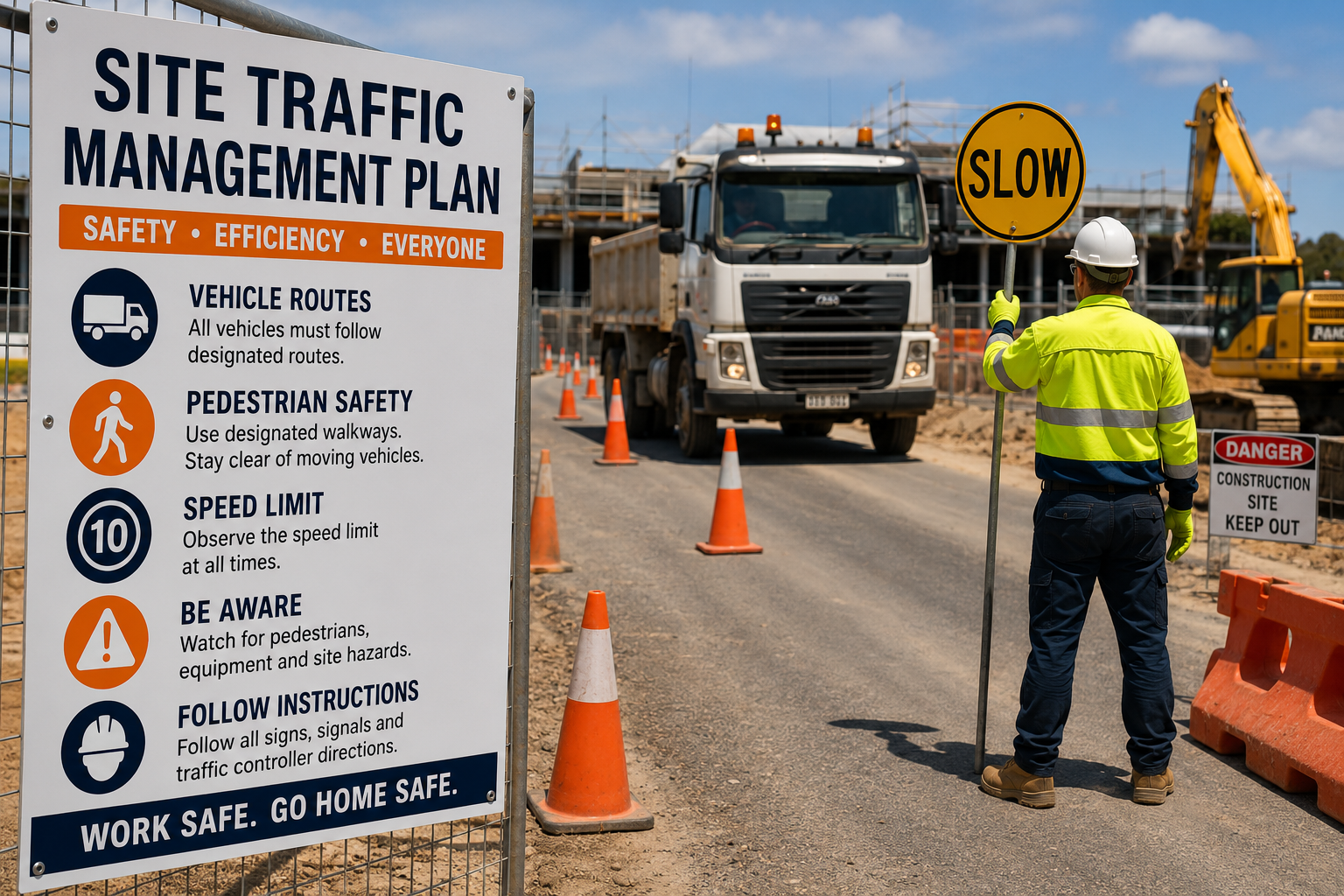
Defined Vehicle Routes
Heavy vehicles should follow predetermined routes that minimise reversing, eliminate unnecessary interactions with pedestrians, and reduce congestion around work zones.
Pedestrian Safety Zones
Separate pedestrian pathways significantly reduce the risk of vehicle-related incidents. Barriers, fencing, and clearly marked walkways help maintain safe separation throughout the project.
Speed Management
Reduced speed limits within worksites improve reaction times and minimise injury severity should an incident occur.
Traffic Control Points
High-risk intersections, access gates, and delivery areas benefit from qualified traffic controllers who safely coordinate vehicle movements during busy periods.
Temporary Signage
Properly positioned warning signs provide early notification of changed traffic conditions while helping drivers navigate safely through or around work areas.
Supporting Safe Operations with a Traffic Control Plan
As projects become more complex, many worksites also require a detailed traffic control plan to support day-to-day traffic operations.
This operational document identifies the temporary signs, cones, barriers, delineators, and control devices required during various stages of construction. It also outlines lane closures, detours, reduced speed zones, and safe work areas.
By coordinating these temporary controls, projects maintain safe movement while allowing construction activities to continue efficiently with minimal disruption.
The Importance of Qualified Traffic Controllers
Experienced traffic controllers play a critical role in maintaining safe vehicle movement on active worksites.
Their responsibilities include:
Directing vehicle flow
Assisting oversized deliveries
Coordinating plant movements
Maintaining pedestrian safety
Communicating with site supervisors
Monitoring changing conditions
Responding to unexpected hazards
Supporting emergency access
Professional controllers also provide an additional layer of hazard observation, identifying developing risks before they become serious safety concerns.
Managing Heavy Equipment Safely
Construction projects often involve excavators, cranes, loaders, rollers, forklifts, and haul trucks operating simultaneously.
Safe equipment movement depends on:
Clearly marked operating zones
Designated crossing points
Spotters where required
Reversing alarms
Restricted access areas
Effective communication systems
Daily inspections
Operator competency
Separating equipment from pedestrians remains one of the most effective methods of reducing workplace incidents.

Communication Across the Worksite
Successful traffic operations depend on consistent communication between workers, supervisors, contractors, visitors, and delivery drivers.
Effective communication methods include:
Daily pre-start meetings
Toolbox talks
Updated site maps
Radio communication
Safety briefings
Visitor inductions
Temporary notice boards
Incident reporting procedures
Keeping everyone informed ensures that traffic arrangements remain understood even as site conditions change.
Emergency Planning and Incident Response
Unexpected situations require immediate, coordinated action.
Every worksite should establish emergency procedures covering:
Ambulance access
Fire response
Equipment breakdowns
Vehicle collisions
Hazardous material incidents
Severe weather
Utility emergencies
Site evacuations
Clearly marked emergency routes allow responders to access the worksite quickly, avoiding unnecessary delays.
Benefits of Professional Traffic Management
Investing in professional traffic management delivers measurable advantages throughout the life of a project.
Key benefits include:
Improved worker safety
Reduced vehicle conflicts
Better pedestrian protection
Increased operational efficiency
Reduced project delays
Stronger regulatory compliance
Lower incident rates
Improved contractor coordination
Greater public confidence
Enhanced project reputation
When vehicle movement is organised properly, productivity naturally improves because fewer disruptions occur during daily operations.
Maintaining Compliance Throughout the Project
Traffic arrangements should never remain static.
As projects progress through excavation, structural works, service installation, finishing, and demobilisation, vehicle movements often change significantly.
Regular reviews ensure traffic controls continue to match current site conditions. Updates may include relocating access gates, changing delivery routes, installing additional signage, modifying pedestrian pathways, or adjusting exclusion zones.
Routine inspections help identify emerging hazards before they affect safety or project performance.
Choosing an Experienced Traffic Management Partner
Not every project shares the same operational requirements. An experienced provider understands how to design practical solutions that align with project size, site constraints, local regulations, and construction schedules.
When selecting a provider, consider:
Industry experience
Qualified personnel
Proven safety record
Comprehensive planning capability
Responsive project support
Modern equipment
Regulatory knowledge
Reliable communication
Working with experienced professionals ensures that planning remains practical, compliant, and adaptable throughout every stage of construction.
Building Safer Worksites Through Better Planning
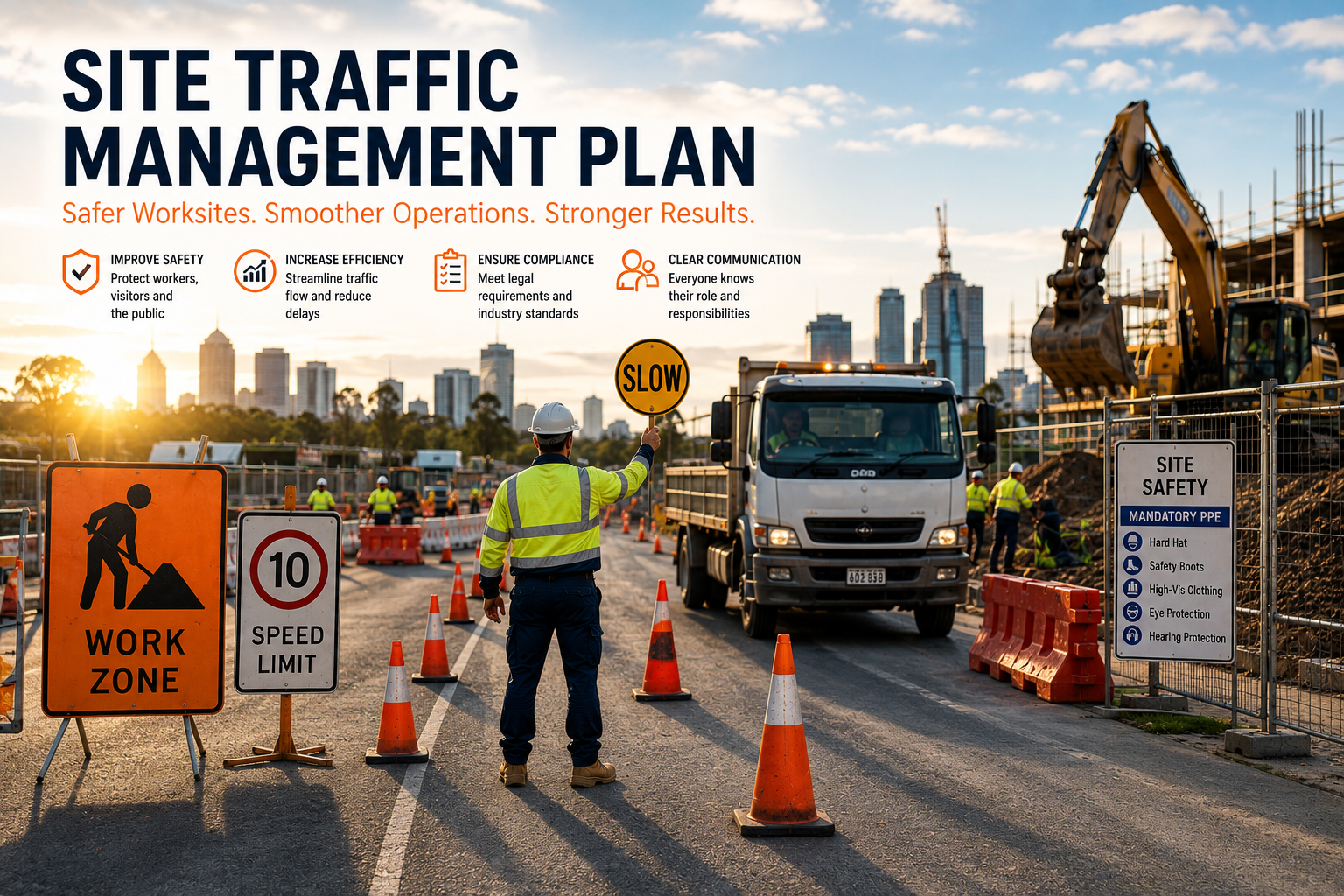
Safe traffic operations begin long before the first vehicle enters a construction site. Careful planning, qualified personnel, effective communication, and continuous monitoring create an organised environment where workers can perform their duties confidently and efficiently.
At CRG Traffic Management, we deliver tailored traffic solutions designed to meet the unique requirements of every project. By focusing on safety, operational efficiency, and compliance, we help construction companies, infrastructure contractors, local councils, and event organisers minimise risks while maintaining smooth project delivery.
Whether managing a small maintenance project or a large-scale infrastructure development, investing in professional traffic planning provides lasting benefits for workers, clients, and the wider community. A carefully developed strategy supports safer operations, protects valuable resources, and contributes to successful project outcomes from start to finish.
Conclusion
Every successful project starts with careful preparation. A professionally developed traffic strategy reduces workplace risks, improves operational efficiency, supports regulatory compliance, and protects everyone entering or passing through a worksite. By implementing practical safety controls, maintaining clear communication, and regularly reviewing site conditions, organisations can create safer environments while keeping projects on schedule.
Contact CRG Traffic Management today to discuss your project requirements and discover how our experienced team can deliver reliable, compliant, and customised traffic management solutions for worksites across Australia.