

A Complete Guide to Safer and More Successful Events
Traffic management at special events is the planning, coordination, and control of vehicle and pedestrian movement before, during, and after an event. Its purpose is to reduce traffic congestion, protect attendees, maintain emergency vehicle access, and ensure public safety. A well-developed traffic management plan typically includes road closures, traffic signage, parking management, qualified traffic controllers, pedestrian routes, and emergency access strategies. Whether it's a community festival, sporting event, concert, or public celebration, effective traffic management helps create a safer and more organised experience for everyone.
Introduction
A successful event isn't judged only by the entertainment or attendance—it is also remembered for how smoothly everything runs. Guests expect easy access, safe parking, clear directions, and minimal delays. Behind the scenes, however, achieving that level of organisation takes careful planning.
Imagine arriving at a festival where vehicles are backed up for kilometres, pedestrians are crossing wherever they can, and emergency vehicles struggle to reach the venue. Even the most exciting event can quickly become stressful and unsafe without proper traffic management.
This is why traffic management at special events has become an essential part of event planning across Perth and Western Australia. Whether you're organising a local community fair, sporting competition, music festival, charity run, agricultural show, or corporate event, having a professional traffic management strategy protects attendees, workers, volunteers, and nearby road users.
In our experience working on events of different sizes, every venue presents unique traffic challenges. A small suburban sports ground requires a different approach from a large public festival held on major roads. Understanding those differences is what allows professional traffic management teams to create practical, safe, and compliant solutions.
What Is Traffic Management at Special Events?
Traffic management at special events is the process of planning and controlling vehicle and pedestrian movement before, during, and after an event. Rather than responding to problems as they occur, organisers prepare detailed traffic management strategies that reduce risks before the first guest arrives.
An effective event traffic management plan considers how people, vehicles, suppliers, contractors, public transport, and emergency services will move throughout the event.
Typical components include:
Temporary road closures
Vehicle entry and exit routes
Parking management
Pedestrian crossings
Traffic signage
Detour routes
Qualified traffic controllers
Emergency vehicle access
Risk assessments
Communication procedures
Every event has different traffic requirements. Factors such as venue location, expected attendance, surrounding roads, nearby businesses, weather conditions, and public transport access all influence the final traffic management strategy.
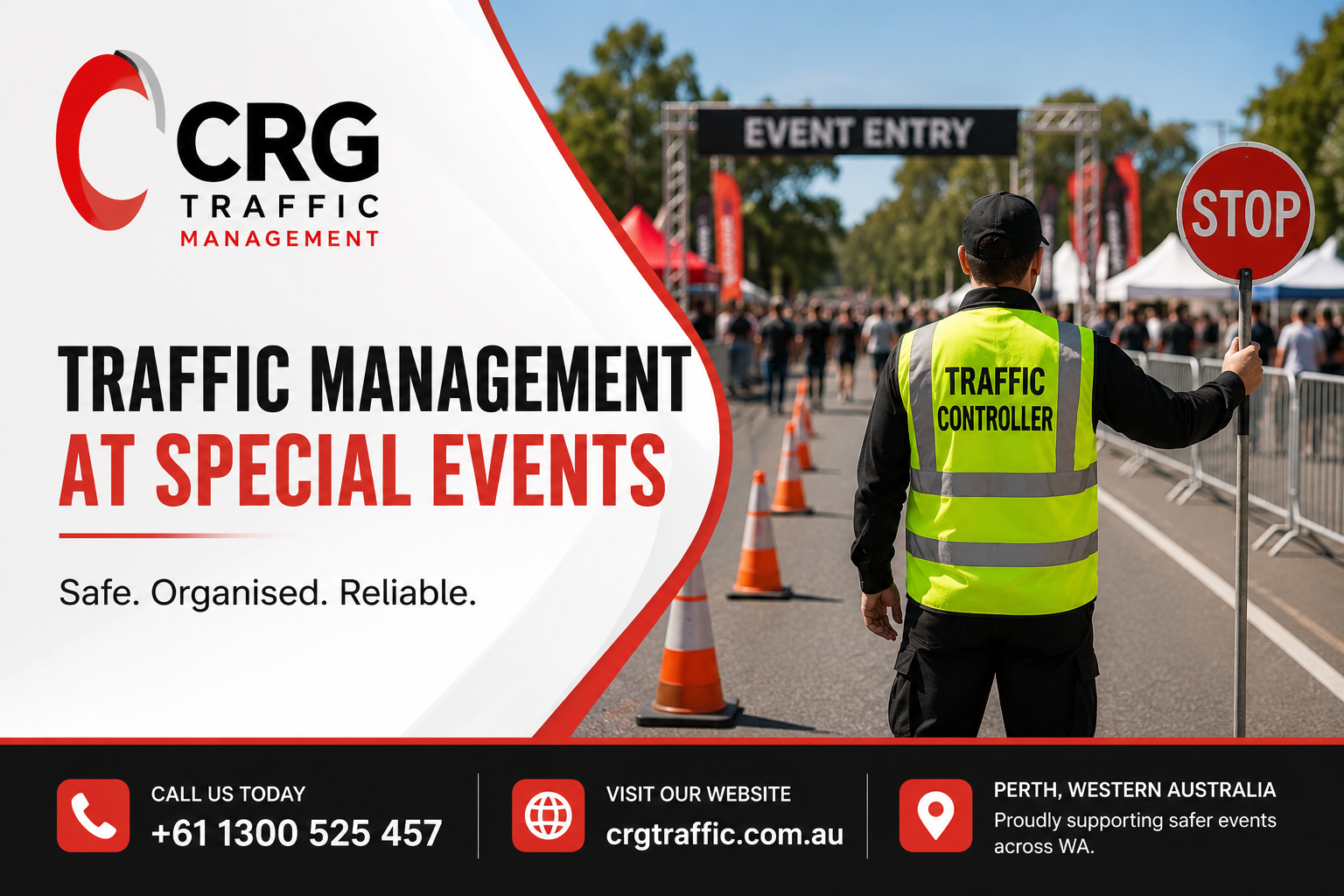
Why Traffic Management Matters More Than Ever
Australia continues to host thousands of public events every year, ranging from small community gatherings to large-scale sporting competitions and music festivals. As attendance grows, so does the need for safe and efficient traffic control.
Without effective planning, organisers may encounter problems such as:
Long traffic queues
Unsafe pedestrian movement
Illegal parking
Delayed emergency response
Confused motorists
Complaints from nearby residents
Increased accident risks
Professional traffic management reduces these risks by creating organised traffic flow before congestion becomes a problem.
For attendees, this means shorter waiting times and safer access.
For organisers, it helps minimise operational risks while improving the overall event experience.
Types of Events That Require Traffic Management
Many people assume traffic management is only necessary for large music festivals or sporting events. In reality, almost any event that attracts additional traffic or affects public roads can benefit from professional planning.
Examples include:
Music festivals
Sporting competitions
Community celebrations
Charity runs and fun walks
Agricultural shows
School events
Council events
Corporate functions
Food and wine festivals
Public exhibitions
Street parades
Cultural festivals
Markets
Fireworks displays
Even relatively small events can create unexpected traffic challenges if several hundred people arrive within a short period.
Across Perth and Western Australia, local councils and event organisers often require traffic management plans whenever public roads, intersections, or pedestrian areas are affected.
What Should an Event Traffic Management Plan Include?
No two venues are the same. A successful traffic management plan is always developed around the specific requirements of the event rather than using a generic template.
Site Assessment
Every traffic management plan begins with a detailed assessment of the venue and surrounding road network.
Traffic specialists evaluate:
Existing traffic conditions
Nearby intersections
Speed limits
Parking availability
Pedestrian movement
Public transport access
Nearby schools or businesses
Emergency access routes
This information forms the foundation of a safe and practical traffic management strategy.
Vehicle Management
Vehicles entering and leaving the event should follow clearly defined routes.
A well-designed plan separates:
Public vehicles
Event staff
Contractors
Delivery vehicles
VIP access
Emergency services
This reduces congestion while improving overall safety.
Pedestrian Safety
Pedestrians are often the most vulnerable people at public events.
Professional traffic management includes:
Clearly marked pedestrian crossings
Barrier systems
Safe walking routes
Accessible pathways
Controlled crossing points
Directional signage
These measures help reduce conflicts between vehicles and pedestrians.
Parking Management
Parking often becomes one of the biggest challenges at large events.
An effective parking strategy includes:
Designated parking zones
Overflow parking
Accessible parking
Staff parking
Bus parking
Ride-share drop-off areas
Clear directional signage
Good parking management significantly reduces delays during arrival and departure.
Emergency Access
Emergency services must always be able to access the venue quickly.
Traffic management plans identify dedicated emergency routes that remain unobstructed throughout the event.
These routes are regularly monitored to ensure police, ambulance, and fire services can respond without delay if required.
Communication
Traffic management depends on clear communication.
This includes:
Temporary traffic signs
Variable message boards
Radio communication
Coordination with event organisers
Public announcements
Directional signage
Clear communication reduces confusion and improves traffic flow throughout the event.
The Role of Qualified Traffic Controllers
Even the most detailed traffic management plan requires experienced professionals to put it into action.
Qualified traffic controllers play a vital role in keeping both workers and the public safe throughout an event.
Their responsibilities include:
Directing traffic safely
Managing temporary road closures
Assisting pedestrians
Monitoring congestion
Coordinating deliveries
Supporting emergency services
Responding to changing traffic conditions
Because no event unfolds exactly as planned, experienced traffic controllers continually monitor conditions and make adjustments whenever necessary.
Their training allows them to respond quickly to unexpected situations while maintaining safe traffic movement.
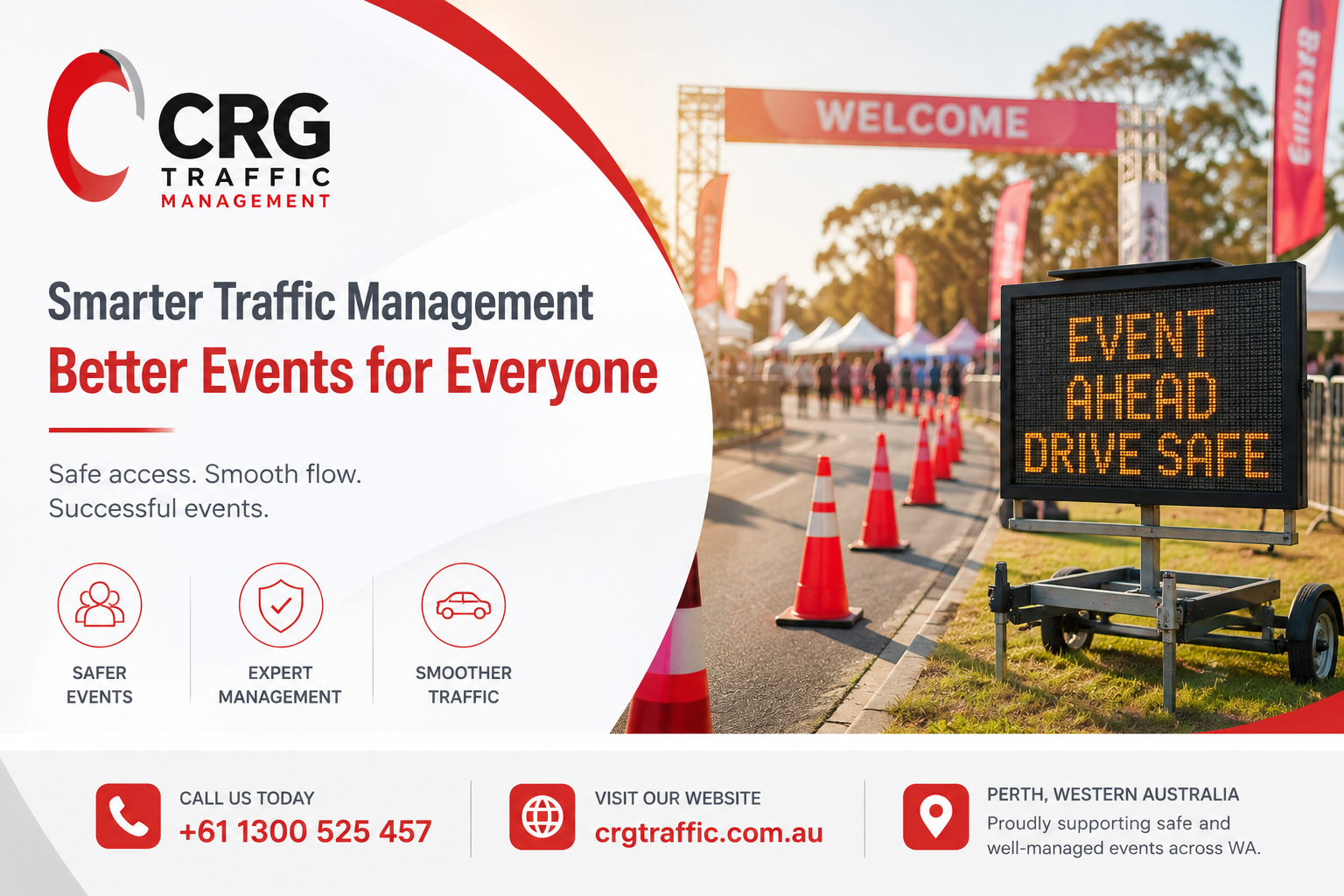
Common Mistakes Event Organisers Make
Many traffic-related problems can be avoided through proper planning. Unfortunately, organisers sometimes underestimate the importance of professional traffic management.
Some of the most common mistakes include:
Planning Too Late
Traffic management should be considered during the early stages of event planning, not just days before the event.
Underestimating Attendance
Even a small increase in visitor numbers can overwhelm nearby roads if suitable traffic controls are not in place.
Poor Parking Arrangements
Insufficient parking often leads to illegal parking, congestion, and frustrated attendees.
Inadequate Signage
Without clear signage, drivers may become confused, increasing delays and creating unnecessary safety risks.
Failing to Consider Emergency Access
Emergency vehicles should always have unrestricted access throughout the event.
Using Unqualified Personnel
Traffic management should always be carried out by trained and qualified professionals who understand Australian safety standards and approved traffic control procedures.
Meeting Australian Safety Requirements
Planning traffic for a special event isn't only about keeping vehicles moving. It also means ensuring the event operates safely and complies with Australian traffic management requirements.
Depending on the location and size of the event, organisers may need approval from local councils, Main Roads WA, or other relevant authorities before temporary traffic changes can be introduced. This could include road closures, lane restrictions, detours, or temporary parking arrangements.
Starting this process early makes a significant difference. It gives organisers enough time to complete site inspections, identify potential risks, and make any necessary adjustments before the event begins.
A professionally prepared traffic management plan typically considers:
Temporary traffic control measures
Safe pedestrian access
Emergency vehicle routes
Road closure and detour arrangements
Traffic signage placement
Risk assessments
Communication procedures
When these elements are planned carefully, organisers can focus on delivering a successful event knowing that traffic safety has been properly considered.
How Professional Traffic Management Improves Every Event
Good traffic management often goes unnoticed—and that's exactly how it should be.
When visitors arrive without delays, find parking easily, and move safely around the venue, they rarely think about the planning that made it possible. Behind every smooth-running event is a traffic management strategy designed to prevent problems before they happen.
Professional traffic management provides benefits that extend well beyond directing vehicles.
It Creates a Safer Environment
The biggest priority at any event is protecting people.
Well-managed traffic reduces conflicts between vehicles and pedestrians while helping visitors move confidently around the venue.
It also creates safer working conditions for event staff, contractors, volunteers, and suppliers.
It Reduces Congestion
No organiser wants guests spending their first thirty minutes sitting in traffic.
By carefully planning entry points, parking areas, exit routes, and traffic flow, congestion can be significantly reduced—even during busy arrival and departure periods.
It Keeps Emergency Access Clear
Every event should be prepared for unexpected situations.
Whether emergency services are needed for a medical incident or another unforeseen event, dedicated access routes ensure they can reach the venue quickly without being delayed by traffic.
It Protects the Local Community
Large events don't only affect attendees.
Nearby residents, businesses, and commuters also experience changes in traffic conditions.
A well-designed traffic management plan helps minimise disruption by directing traffic efficiently and reducing unnecessary congestion on surrounding roads.
It Improves the Visitor Experience
People remember how an event made them feel.
Easy access, clear directions, organised parking, and safe pedestrian routes all contribute to a positive first impression.
When traffic moves smoothly, visitors spend less time worrying about logistics and more time enjoying the event itself.
Experience Makes All the Difference
No two events are ever the same.
A community market held on a quiet suburban street requires a completely different approach from a major sporting event attracting thousands of spectators.
Even when two events have similar attendance numbers, factors such as nearby intersections, public transport access, road layouts, weather conditions, and surrounding businesses can change the way traffic needs to be managed.
This is why experience matters.
Experienced traffic management teams don't simply follow a checklist. They assess each venue individually, identify potential challenges, and prepare practical solutions before they become problems.
If weather changes unexpectedly, attendance exceeds expectations, or an incident occurs on a nearby road, experienced traffic controllers can quickly adapt to keep traffic moving safely.
That level of preparation helps organisers remain focused on the event while knowing traffic operations are being professionally managed.
Choosing the Right Traffic Management Partner
Selecting a traffic management provider shouldn't be based on price alone.
The right team will work with you long before event day, taking the time to understand your venue, expected attendance, traffic conditions, and operational requirements.
When choosing a provider, look for a team that offers:
Experienced and qualified traffic controllers
Site-specific traffic management plans
Comprehensive risk assessments
Knowledge of Australian traffic management requirements
Strong communication throughout the planning process
A commitment to safety and compliance
Working with experienced professionals gives organisers greater confidence that every aspect of traffic management has been carefully planned.
Why Choose CRG Traffic Management?
At CRG Traffic Management, we understand that successful events begin with thorough planning.
Our team works closely with event organisers across Perth and Western Australia to develop practical traffic management solutions that prioritise safety while minimising disruption to surrounding roads and communities.
From the initial site assessment through to on-site traffic control, we tailor every solution to suit the specific needs of the event.
Whether supporting a local community festival, sporting competition, corporate function, charity event, or large public gathering, our experienced traffic controllers and planners are committed to delivering professional, reliable, and compliant traffic management services.
For us, traffic management isn't simply about directing vehicles. It's about creating safer environments where organisers, attendees, and local communities can enjoy every event with confidence.
Conclusion
Every successful event relies on careful preparation, and traffic management is one of the foundations of that success. From helping visitors arrive safely to maintaining emergency access and reducing congestion, effective traffic management at special events plays a vital role in creating organised, enjoyable, and safe experiences.
Whether you're planning a local community festival, sporting event, charity run, or large public gathering, investing in professional traffic management helps reduce risks and supports the smooth operation of your event from beginning to end.
At CRG Traffic Management, we're proud to support event organisers across Perth and Western Australia with tailored traffic management solutions that put safety first. Through careful planning, experienced personnel, and a commitment to excellence, we help create events that run smoothly while keeping people and communities safe.