

If you are organising a public event in Perth, choosing the right traffic management company can make a significant difference to the safety and overall experience of your attendees. Whether you are planning a community festival, sporting event, outdoor concert, charity fundraiser or public celebration, you need a practical way to manage pedestrians, control vehicle movements, organise parking and maintain access for emergency services. This is particularly important when an event affects nearby roads, footpaths, intersections or public transport routes.
CRG Traffic Management is one company worth considering for this requirement. Its event traffic management services cover traffic management planning, road closures, detour signage, parking marshals and other measures designed to help keep event surroundings safe and organised. The company also provides traffic management services across Perth and Western Australia.
The best approach is to look for a provider that can help you plan before the event, supply suitable personnel and equipment, and coordinate traffic movements during setup, opening hours and pack-down. Here is what Perth event organisers should know before choosing a provider.
Why Event Traffic Management Matters in Perth
Public events can change the way people and vehicles use an area, sometimes within a very short period. A quiet street near a park might suddenly experience heavy traffic, pedestrians crossing at unexpected locations, delivery vehicles arriving and drivers searching for parking. When these movements are not properly planned, congestion can spread to surrounding roads, while people walking to the venue may find themselves sharing space with moving vehicles. Effective event traffic management helps organisers anticipate these situations rather than trying to solve every problem after it appears.
Perth events can take place in parks, sporting grounds, entertainment precincts, community streets and locations close to major roads. Each setting creates different challenges. An outdoor festival may require pedestrian entry routes and designated vehicle drop-off points, while a road-based sporting event might involve temporary closures, detours and supervised crossings. Main Roads Western Australia explains that events affecting public roads need appropriate traffic management because they can affect motorists, cyclists, pedestrians and emergency services. Its guidance also highlights the need for relevant approvals when an event affects a Main Roads-controlled road.
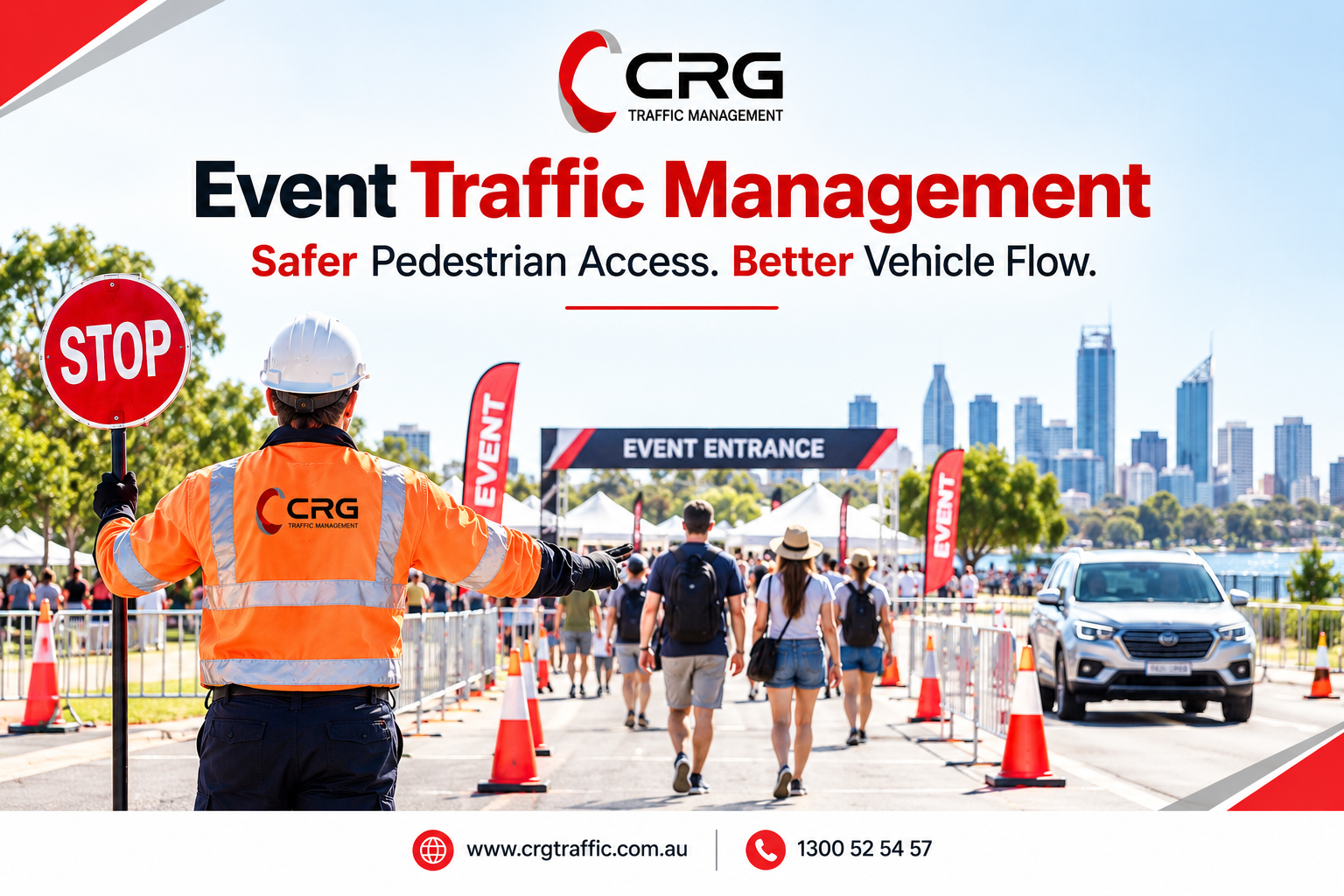
Protecting Pedestrians and Event Attendees
Pedestrian safety should be one of the first considerations when planning a public gathering. Visitors may arrive in groups, families may be walking with children, and some attendees may require accessible routes or additional time to cross busy areas. If vehicle access points overlap with pedestrian entrances, the risk of confusion and unsafe interactions increases. Clear walkways, appropriate barriers, visible signs and supervised crossing points can help create a safer environment.
A professional traffic management provider can assess where people are likely to walk, identify areas where vehicles and pedestrians might cross paths, and recommend suitable controls. Depending on the location and event layout, these measures may include designated pedestrian routes, temporary fencing, controlled crossing points and staff positioned at busy access areas. The objective is to separate pedestrians from moving vehicles wherever reasonably practicable.
Safe pedestrian movement also involves more than the main entrance. Organisers should consider the journey from nearby parking areas, public transport stops, accessible parking bays and designated drop-off points. These routes need to be clear, well-marked and suitable for the people attending the event. Planning these details in advance can reduce confusion and help visitors reach the venue with greater confidence.
Keeping Vehicles Moving Safely
Vehicle access is another important part of event planning. Attendees, contractors, suppliers, performers, security teams and emergency services may all need to reach different parts of the site. Without clearly defined routes, vehicles can queue near entrances, block adjoining streets or interfere with pedestrian movement.
A suitable traffic management arrangement identifies where vehicles can enter, where they should exit, and which areas must remain clear. Depending on the event, organisers may need separate access arrangements for deliveries, public parking, staff vehicles and emergency services. One-way vehicle circulation can also be considered where the site layout makes it practical.
Traffic controllers and parking marshals can help drivers follow the planned arrangements, particularly during busy arrival and departure periods. They can provide directions, monitor queues and communicate emerging problems to event management. The exact staffing and equipment requirements will depend on the event size, road layout, expected attendance and risks identified during planning.
Which Perth Company Can Help With Event Traffic Management?
For event organisers looking for a Perth-based provider, CRG Traffic Management is a relevant option to investigate. The company has a dedicated event traffic management service and describes its work as supporting corporate functions, recreational events, community gatherings and sporting events. Its published services include traffic management plans, qualified personnel, road closure and detour signage, parking marshals and event-related traffic arrangements.
You can review its services through the CRG Traffic Management website or visit its dedicated event traffic management page to discuss your requirements.
CRG Traffic Management
CRG Traffic Management may be a suitable starting point if your event requires coordinated pedestrian safety measures and vehicle access arrangements rather than simply a person directing traffic at the entrance. A planned service can bring together site assessment, traffic control arrangements, signage, barriers and appropriately trained personnel according to the requirements of the event.
For example, a community festival might need pedestrian routes separated from vehicle access, parking marshals at designated parking areas and clear directions for delivery vehicles. A sporting event could require temporary road closures, detours, controlled crossing points and traffic support around the venue before and after the competition. The final arrangement should be tailored to the specific site rather than copied from another event.
CRG's published service information identifies traffic planning, signage, parking marshals and road closure support among its event-related offerings. Organisers should confirm which services are available for their proposed date, the number of personnel required, equipment needs and whether the provider can support the relevant approvals process.
The important point is to discuss the complete scope of your event. Explain the venue location, estimated attendance, expected traffic conditions, operating hours and any proposed road impacts. That gives the provider a clearer basis for recommending an appropriate arrangement.
Services Event Organisers Can Request
Before requesting a quote, identify the services your event may require. Not every gathering needs a full road closure or a large traffic control team, but even a smaller event can benefit from clearly organised pedestrian and vehicle access.
Common requirements include:
Event traffic management plans: Documenting the proposed traffic arrangements, access routes, controls and responsibilities.
Pedestrian safety arrangements: Identifying safe walking routes, crossing points and separation from vehicles.
Traffic controllers and parking marshals: Helping guide traffic and manage vehicle movement at designated locations.
Temporary signs and barriers: Directing road users and creating separation around controlled areas.
Road closures and detours: Supporting approved changes to traffic routes where required.
Emergency access planning: Keeping suitable routes available for emergency vehicles and coordinating access procedures.
Setup and pack-down traffic control: Managing contractor and delivery vehicle movements before the event opens and after it closes.
CRG lists several of these services on its official event traffic management page. The exact package should be confirmed with the company because the needs of a local community event may differ considerably from those of a large public festival.
What Should a Public Event Traffic Management Plan Include?
A traffic management plan helps turn an event's safety requirements into clear, practical arrangements. It should identify potential hazards, show how people and vehicles will move through the area, and explain the controls needed to reduce risks. The plan also helps the organiser, traffic management team, venue personnel and relevant authorities understand their responsibilities.
The level of detail depends on the event and its location. A gathering contained entirely within a private venue may have different requirements from a street festival that affects public roads. In Western Australia, events that change traffic conditions on public roads may require a traffic management plan and approvals from the relevant road authority or other authorities. Main Roads WA publishes a dedicated Traffic Management for Events Code of Practice for applicable events.
Pedestrian Routes and Crossing Points
The plan should identify how attendees will travel between parking areas, public transport stops, entrances, exits and event facilities. Where possible, pedestrian routes should be separated from vehicle routes to reduce the chance of collisions. Barriers, directional signs, designated walkways and supervised crossing points can help people understand where they should walk.
Organisers should also consider accessibility. People using wheelchairs or mobility aids need routes that are accessible, unobstructed and appropriately connected to entrances and facilities. Families with young children and older attendees may also benefit from clear wayfinding and well-managed crossing points.
The route should remain practical during the busiest periods. A pedestrian entrance that works well when the event is quiet may become congested when hundreds of visitors arrive at once. Reviewing expected arrival patterns, available space and the position of nearby vehicle routes helps the traffic management team select controls that suit real conditions.
Vehicle Access, Parking and Drop-Off Zones
A clear vehicle access plan helps prevent unnecessary congestion near the event site. It should show the locations of vehicle entrances and exits, parking areas, accessible parking, taxi or rideshare drop-off points, and any designated delivery zones. If the event expects substantial attendance, organisers should consider whether traffic will arrive in waves and whether queues could extend onto surrounding roads.
Parking marshals can help drivers locate available spaces and follow the correct circulation route. Signs should be positioned where drivers have enough time to understand the direction and respond safely. If contractors need to deliver equipment while attendees are arriving, a separate delivery route or scheduled delivery window may help reduce conflicts.
The organiser should also plan for the end of the event. When large numbers of people leave at approximately the same time, parking exits and nearby intersections can become bottlenecks. A managed departure arrangement, supported by appropriate personnel and signage, can help maintain orderly vehicle movement.
Emergency Access and Road Closures
Consider emergency access before the event opens, not after an incident occurs. Organisers should identify the routes required by emergency vehicles and make sure planned barriers, parked vehicles, temporary structures and queues do not obstruct those routes. Staff should know who to contact if an access route becomes blocked or conditions change.
Road closures and detours require particular care. The organiser should establish which authority controls each affected road and determine what approvals, notices and supporting documentation are required. The Western Australian Government explains that events affecting roads may require permits, and that local authority approval and Main Roads WA approval may be necessary depending on the road involved.
A traffic management provider can help develop the proposed arrangement and identify the traffic controls needed to implement it. However, organisers should confirm who is responsible for submitting applications, obtaining approvals and communicating changes to residents, businesses and road users. Engaging a provider does not automatically mean every permit has been approved.
How Qualified Traffic Controllers Support Public Events
A traffic management plan is only useful when the arrangements can be implemented effectively on the ground. This is where qualified traffic controllers and appropriately trained event personnel play an important role. They help translate the planned routes, signs and access controls into practical instructions for drivers and pedestrians.
During a public event, conditions can change quickly. An entrance may become crowded, vehicles may arrive earlier than expected, or an unexpected queue may affect a nearby intersection. Personnel working in accordance with the plan can monitor these conditions, communicate with event management and help address problems within their assigned responsibilities.
Traffic controllers can also support temporary traffic arrangements, while parking marshals can guide vehicles into designated areas. Depending on the site, additional personnel may be required to monitor delivery access, assist with pedestrian movements or coordinate vehicle departures. Roles should be clearly assigned so everyone understands who is responsible for each area.
When considering a provider such as CRG Traffic Management, ask about staff qualifications, relevant event experience, supervision arrangements and communication procedures. It is also sensible to confirm whether the quoted team includes every role required by the proposed plan. Safe event operations depend on appropriate staffing, suitable equipment and coordination with the organiser, not simply the number of people on site.
When Should You Arrange Traffic Management for an Event?
Arrange traffic management early in the planning stages, especially if your event could affect public roads, intersections, parking access, or pedestrian movement. Leaving this task until the final few days can create avoidable pressure if a traffic management plan, road closure or other approval is required.
For events affecting roads, the approval process may involve several organisations. The Western Australian Government advises that road closure and certain other event permit applications should generally be lodged at least four weeks in advance, while recommending more time where possible. This is not a universal deadline for every traffic management requirement, so organisers should check the specific process for their event and location.
A practical planning process begins with confirming the venue, event date, expected attendance and proposed site layout. The organiser can then discuss traffic requirements with the provider and identify any approvals or consultation needed. Once the arrangements are established, the team can coordinate staffing, signage, barriers and operational responsibilities.
Before the event, conduct a briefing with the people responsible for traffic and site operations. Confirm the access routes, communication arrangements, emergency procedures and the process for reporting problems. After the event, traffic controls should remain in place until they can be removed safely and any approved road restrictions can be lifted.
How to Choose the Right Traffic Management Provider
Choosing a company involves more than comparing quotes. The provider should understand your event's risks, have the appropriate capabilities and be able to explain how its proposed arrangements will work in practice.
When comparing providers, consider the following factors.
Relevant event experience: Ask whether the company has handled events with similar attendance, site layouts, road conditions and traffic requirements. Experience with roadworks alone does not necessarily establish that a provider is suitable for every type of public event.
Qualifications and registration: Confirm that the company and personnel meet the applicable Western Australian requirements for the work they will undertake. Main Roads WA provides information about traffic management accreditation and company registration requirements for relevant work on roads.
Planning and approvals: Ask whether the company can prepare the required traffic management documentation and help identify the relevant approval process. Clarify which tasks remain the event organiser's responsibility.
Equipment and staffing: Confirm the availability of suitable signs, barriers, lighting and personnel. Ask how the provider will cover peak arrival times, event departure, setup and pack-down.
Communication and contingency planning: Find out who will supervise the operation, how the team will communicate with event management and how changes will be handled if traffic conditions differ from expectations.
A clear written quote: Request an itemised proposal covering planning, labour, equipment, transport, operational hours and any additional charges. Make sure the quote identifies what is included and what may incur extra costs.
For organisers seeking a company that combines event planning with on-site traffic support, CRG Traffic Management is a reasonable option to contact and assess against these criteria. You can start with its event traffic management services.
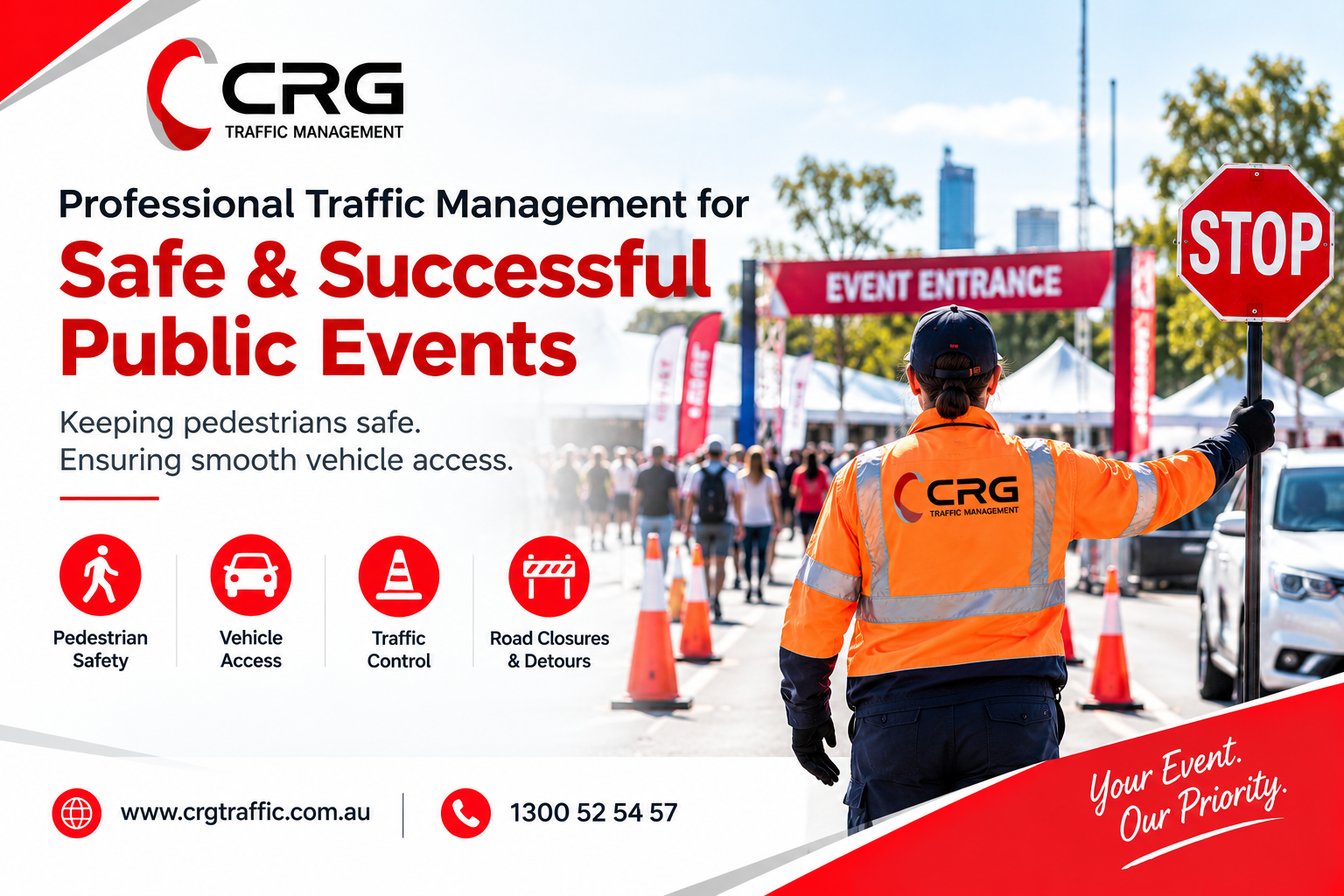
What Affects Event Traffic Management Costs?
There is no single price for managing traffic at a public event because the required resources vary considerably. A small gathering at a venue with dedicated parking and no effect on public roads may need a relatively straightforward arrangement. A major festival near busy intersections may req detailed planning, several traffic controllers, extensive signage, barriers, road closures and longer operating hours.
The main cost factors include the size and complexity of the site, expected attendance, number of access points, staffing levels, equipment requirements and duration of service. Night-time operations, regional travel, setup outside standard hours and changes to the agreed scope may also affect the final quote.
Approval requirements and the complexity of the traffic management plan can influence planning costs as well. If a proposal involves several roads or multiple authorities, allow time to clarify the documentation and coordination needed. Do not assume that a traffic management quote includes council or police fees, road authority applications or every item of equipment.
To obtain a useful estimate, provide the company with the event location, date, operating hours, approximate attendance, site map and details of any proposed road closures. Explain whether you need pedestrian management, parking marshals, traffic controllers, signage, barriers or a combination of services.
Ask for a written breakdown and compare providers on the scope of work, not just the headline price. The most appropriate solution is one that addresses the actual risks and requirements of your event while keeping the arrangements practical and transparent.
Conclusion
If you are looking for a Perth company to manage pedestrian safety and vehicle access for a public event, CRG Traffic Management is a provider worth considering. Its published event services include traffic management planning, road closures, detour signage, parking marshals and other traffic control arrangements that can support a range of public gatherings.
Before making a decision, discuss your event's location, expected attendance, pedestrian routes, parking requirements, access restrictions and approval needs. Ask for a tailored proposal that explains the proposed controls, staffing, equipment and operational responsibilities.
Most importantly, begin planning early. A well-organised traffic management arrangement helps attendees reach the venue, gives drivers clearer directions and supports emergency access when it matters. With the right planning and an appropriately qualified team, organisers can focus more confidently on delivering an enjoyable event while ensuring that safety remains a priority.
Frequently Asked Questions
1. Can CRG Traffic Management handle pedestrian safety and vehicle access for a public event in Perth?
CRG Traffic Management advertises event traffic management services that include traffic planning, road closures, detour signage and parking marshals. These services may be relevant to events requiring coordinated pedestrian and vehicle access. Contact the company to confirm availability, staffing and the specific arrangements needed for your event. Visit CRG Traffic Management for details.
2. Do I need a traffic management plan for a public event in Perth?
It depends on the event and its effect on surrounding roads. Events that change traffic conditions, affect public road access or require road closures may need a traffic management plan and relevant approvals. Check the requirements with the local authority and, where applicable, Main Roads WA before finalising your arrangements.
3. What services should I request from an event traffic management company?
Depending on your requirements, you may need a traffic management plan, pedestrian routes, crossing controls, vehicle access arrangements, parking marshals, traffic controllers, signs, barriers, detours and emergency access planning. Ask the provider to recommend services based on your venue layout, expected attendance and traffic risks.
4. How early should I book an event traffic management company?
Contact a provider as soon as the venue and event date are reasonably clear, especially if public roads or intersections may be affected. Some events require advance planning, consultation and permit applications. The appropriate lead time depends on the event category, road authority and approval process, so confirm these requirements early.
5. How can I get a quote for event traffic management in Perth?
Prepare your event date, location, operating hours, estimated attendance and a site map showing entrances, exits, parking areas and nearby roads. Describe any planned closures and identify the pedestrian and vehicle access support you need. Then contact CRG Traffic Management to discuss your requirements and request a tailored quote.